
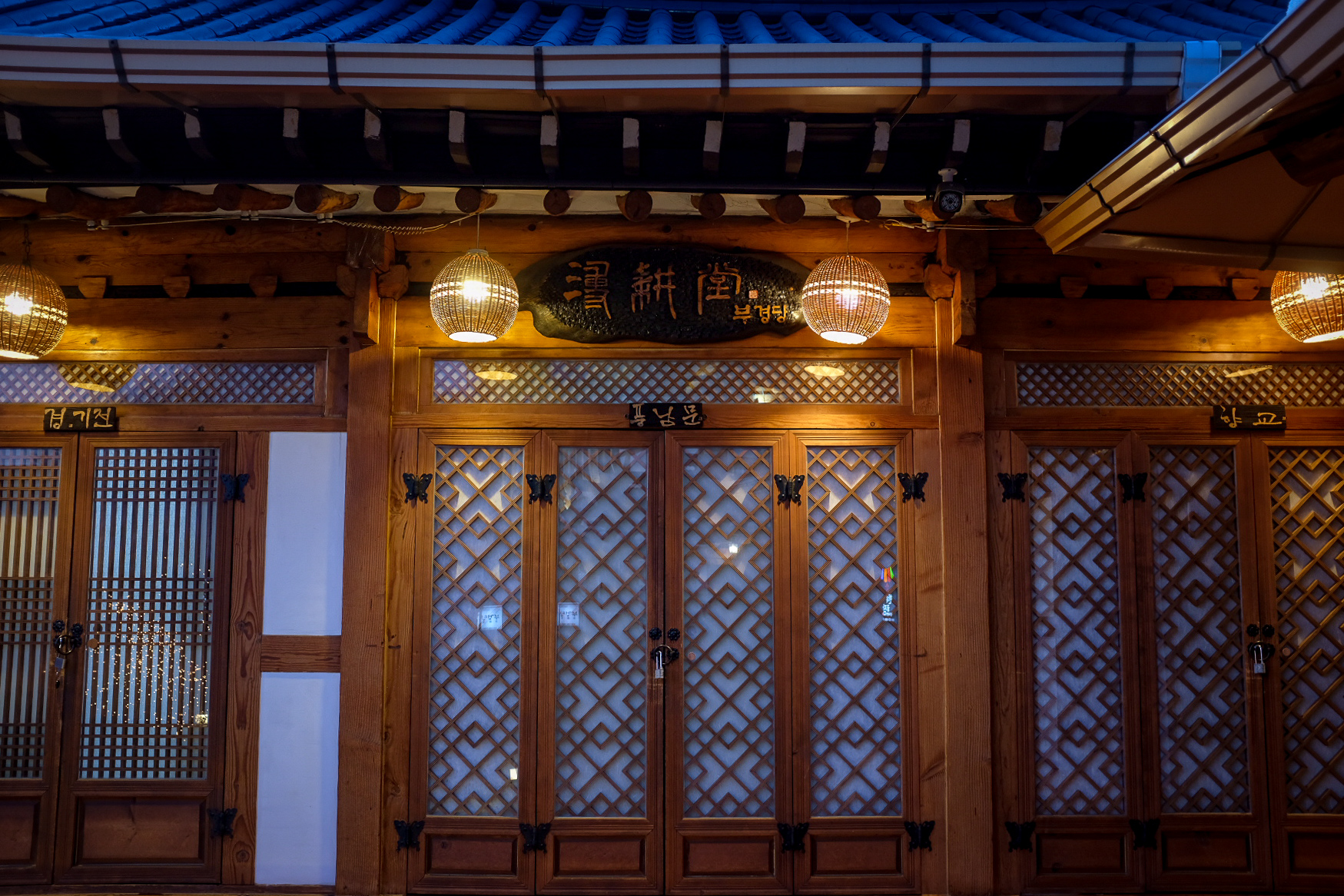
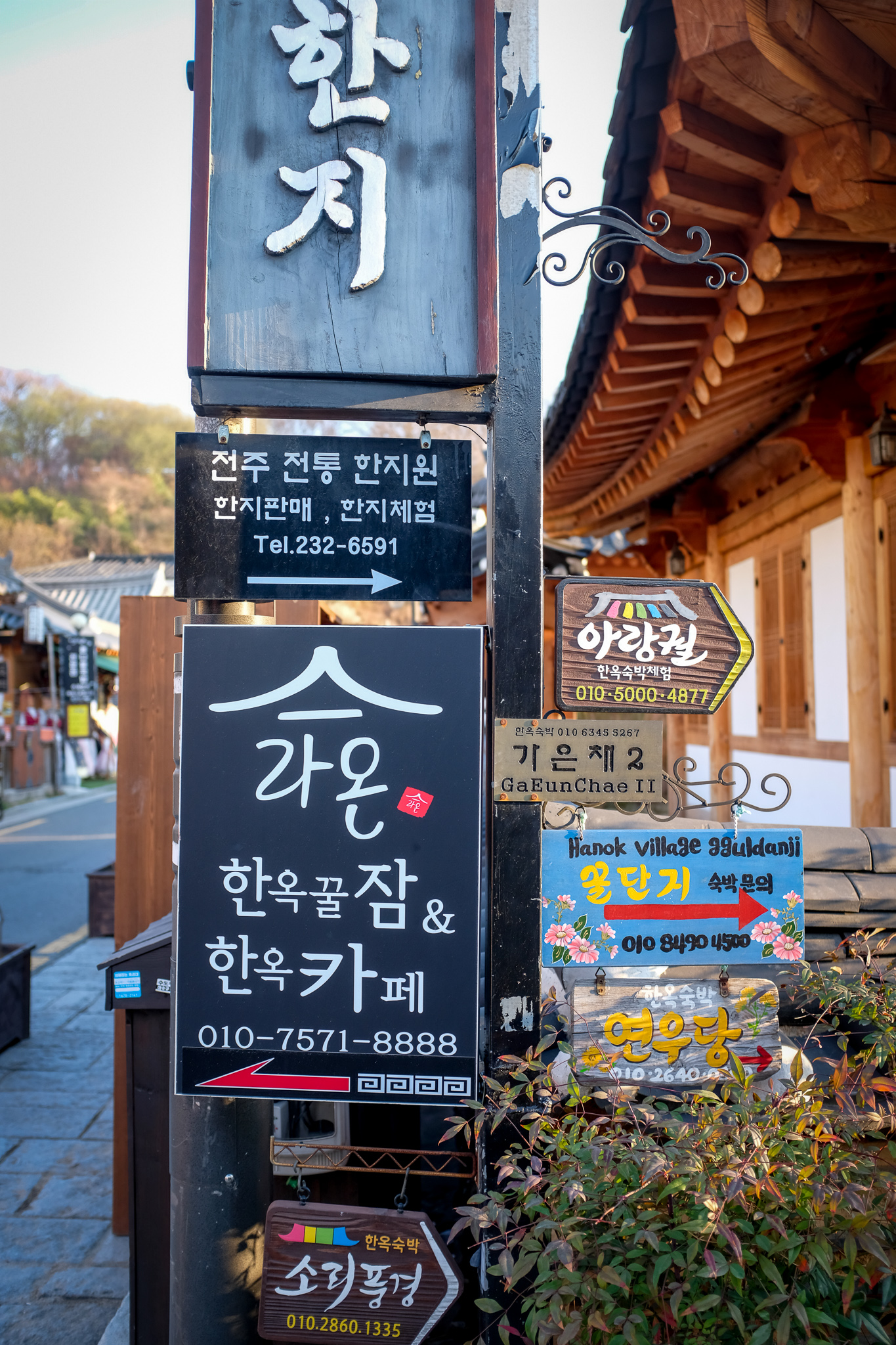
I’ve posted about the food, I’ve posted about the accommodation. So what did I actually do when I arrived at Jeonju at 5pm on a Saturday? My friend and I had a lovely time strolling among modernized hanok and soaking in (what was then) some quiet air. It’s a rare sight to see even for locals.
But if you have been reading my past posts or followed my instagram, you might have noticed that I’ve been introducing history trivia here and there among my travel commentary. Yep, I love history. South Korea is a relatively new country – it celebrated its 74th year of liberation this year – and has clawed itself up (with help) from being one of the poorest countries in the world to one ranked 11th in nominal GDP. The elderly in this country have seen and survived annexation by a foreign power, liberation then internal divide, an invasion by that northern neighbor, amazingly rapid economic development, and then the fast-paced technologically advanced society today. There is such a wealth of history here, and I’m happy to research their footprints and ask for anecdotes at any opportunity I get. A subway line, a regional festival, a seemingly spotless tourist hotspot – they’ve all got stories I’ll be sharing with you through this blog. So onto Jeonju Hanok Village!
Jeonju Hanok Village
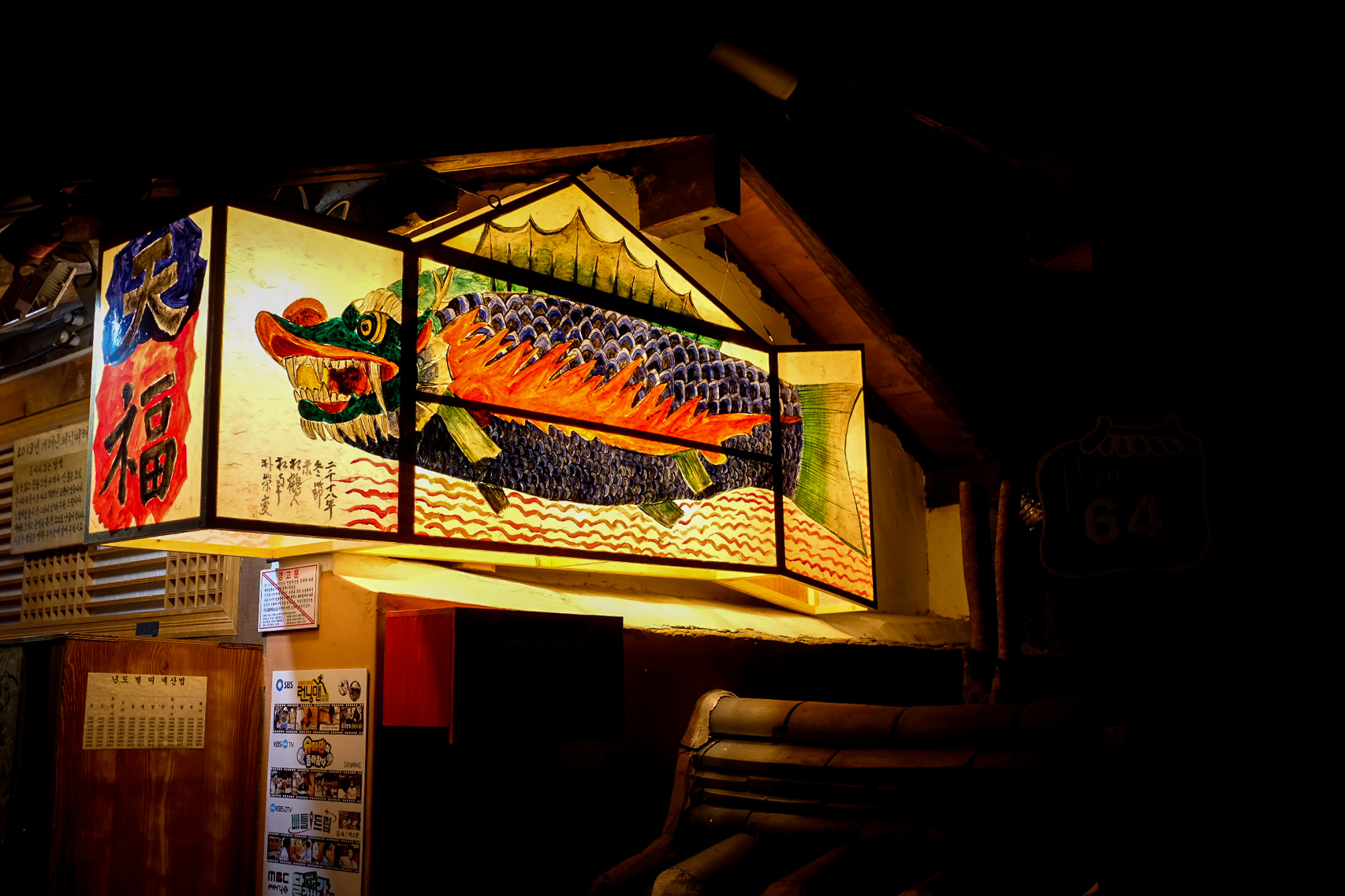
Jeonju Hanok Village was created in the 1930s to protest against Japanese commercial districts advancing in areas previously inside fortress walls. What was the big deal? The inside and outside of these walls demarcated higher and lower social status. With the occupation, social norms had became more blurred. So locals with elite status, in an effort to hold on to their identity, built a modernized hanok district around Geonggijeon Hall. (What that is, I’ll get to it in a few paragraphs.) The area became the regional center of education, owing to the various schools scattered nearby.
Fast forward to the current era, and this old district became one of the few surviving hanok villages – during the 1970s, many rural houses had been replaced with modern housing through the New Village Movement, an economic development plan. Jeonju managed to avoid it because then President Park Chung-hee saw it on a train by chance, and commented that it should be preserved. Or so the story goes, as told by a video of an old local couple in Jeonju history hall.
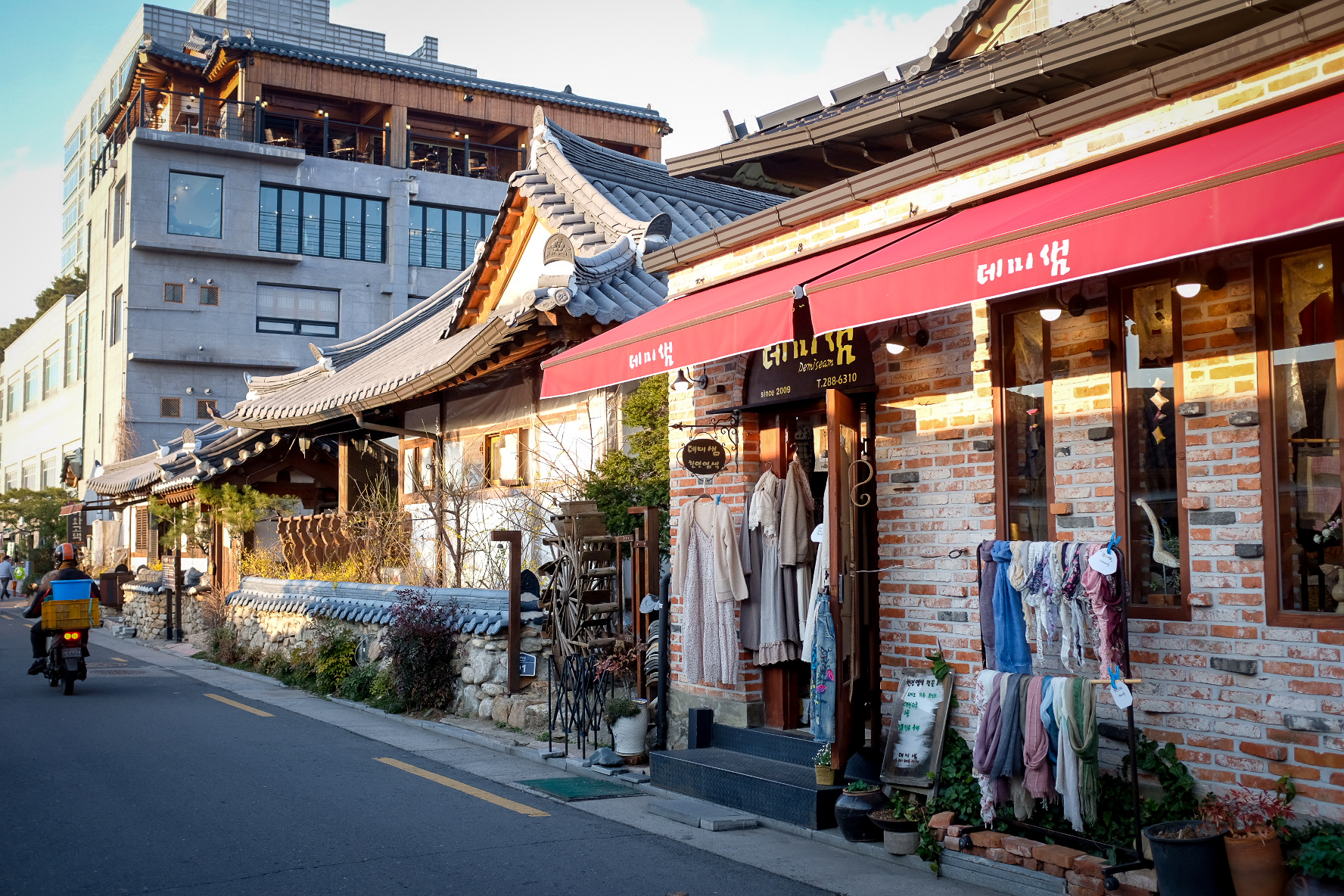
Now it’s a district with around 700 hanoks, filled with shops, restaurants, cafes, museums. Since 2014 it has ranked first as a tourist hotspot for locals. The streets, bracketed by modernized wooden buildings, are quite wide, and people walk alongside a little stream running on the stone paved blocks. According to a sign, kids can play there in the summer. Couples and families stop here and there to take photos under blooming flowers. Maybe buy some snacks to go.
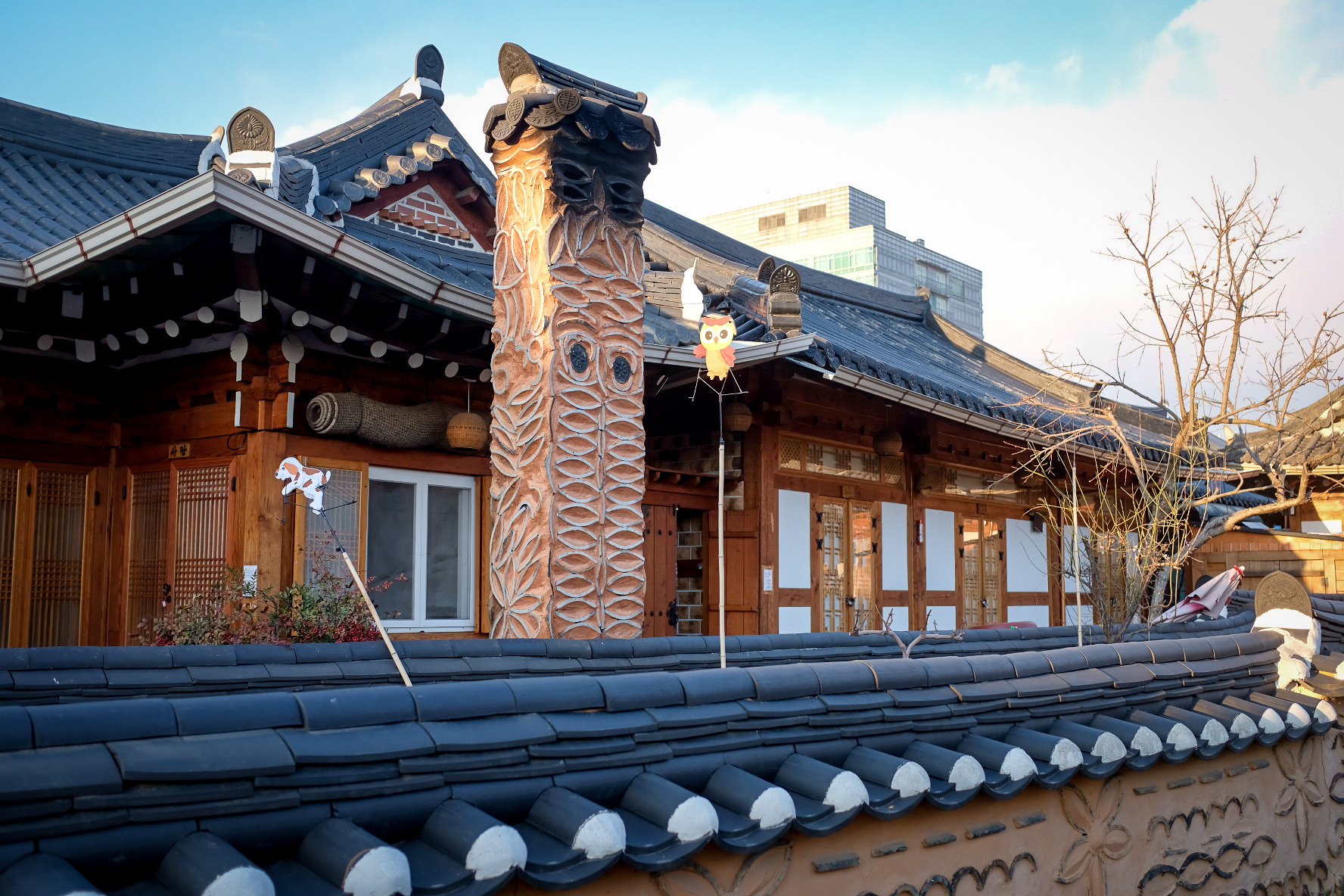
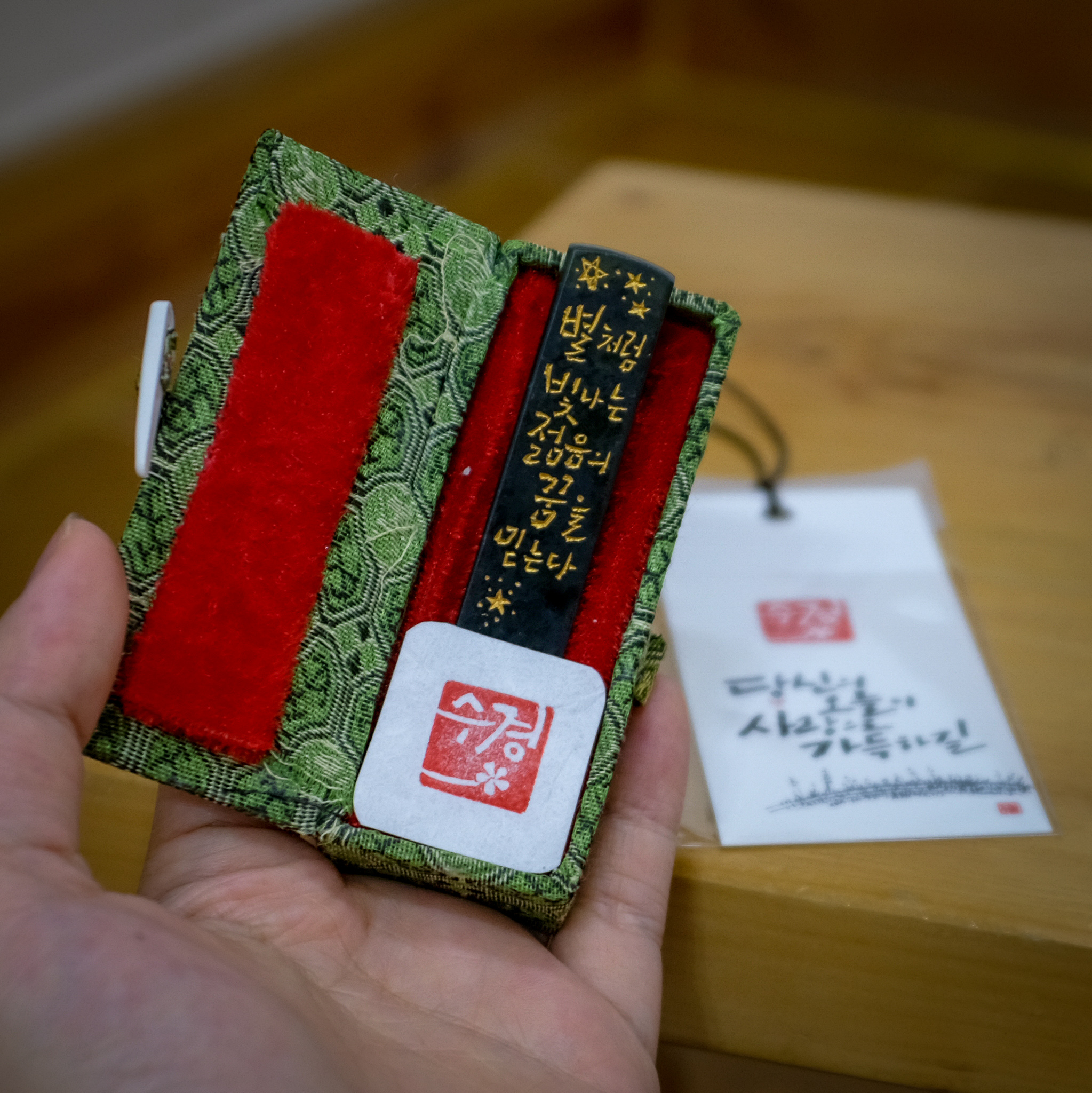
The endless rows of hanok is the no. 1 reason I love this place. But the second reason is definitely the wares. I often go to Insadong (two times a week, actually), but as much as I love the place, you have to take care to avoid the mass-produced touristy shops. And yeah, there are tourist traps here too, but they make it easier… having bright yellow banners on the front and all. Also, the village is bigger than the main street in Insadong, so it feels more spread out. I bought a carved stamp and some illustrated bookmarks. By stamp, I mean an artisan carved and painted a small picture or writing on the length of a stone stamp. Once I chose one of the designs, she carved my initials on the area where the stamp would leave its mark. (This is actually sold in Insadong too, but I really liked one of her design.) My friend bought a hand-held mirror with an illustration on the back. Other than those, there are hand-crafted china, patchwork quilts, traditionally dyed cloth and paper with a Korean flair.
The third reason to visit here is the food. I have a whole post dedicated to the delicious things, so read about it here!
Gyeonggijeon Hall
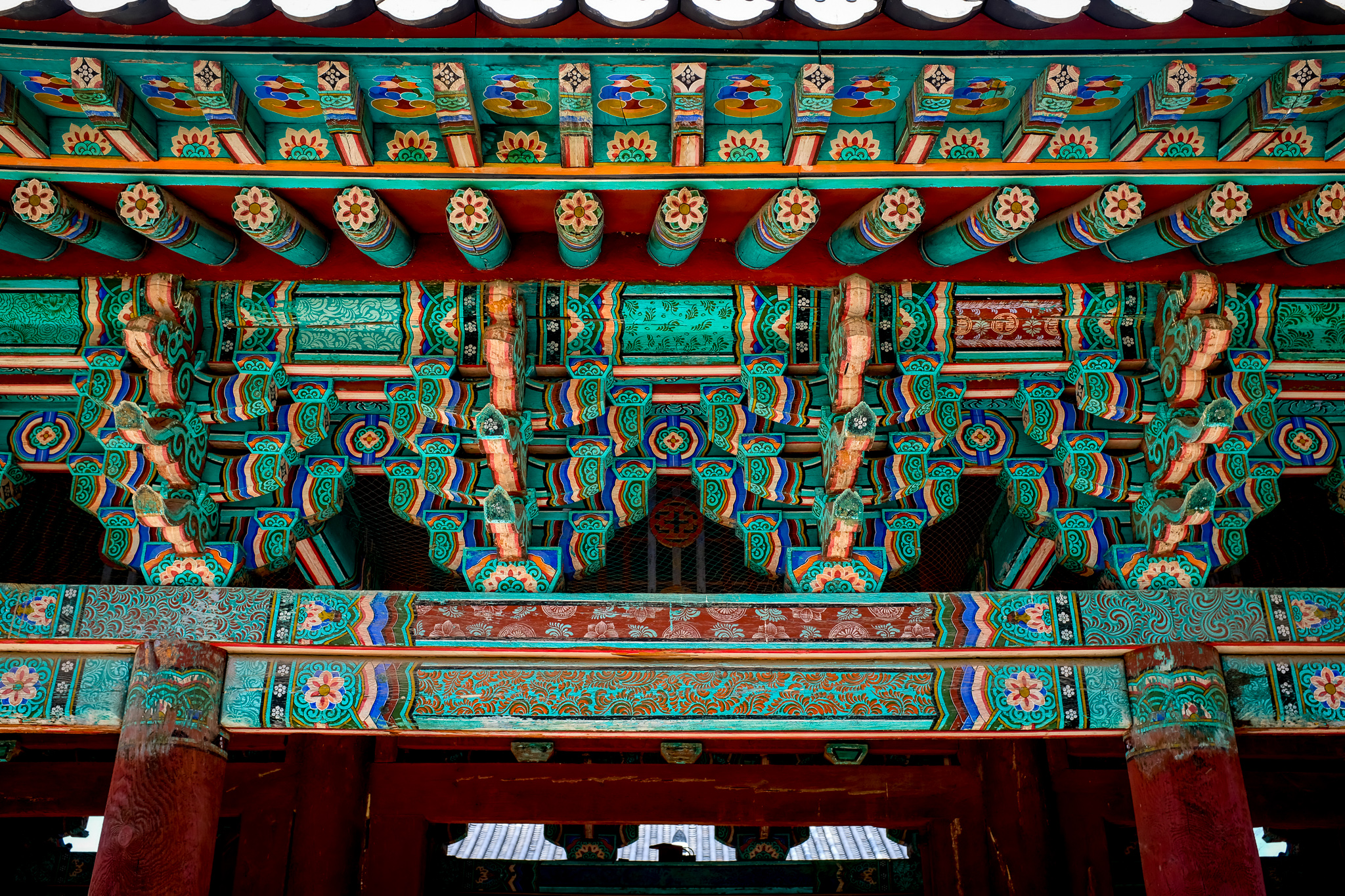
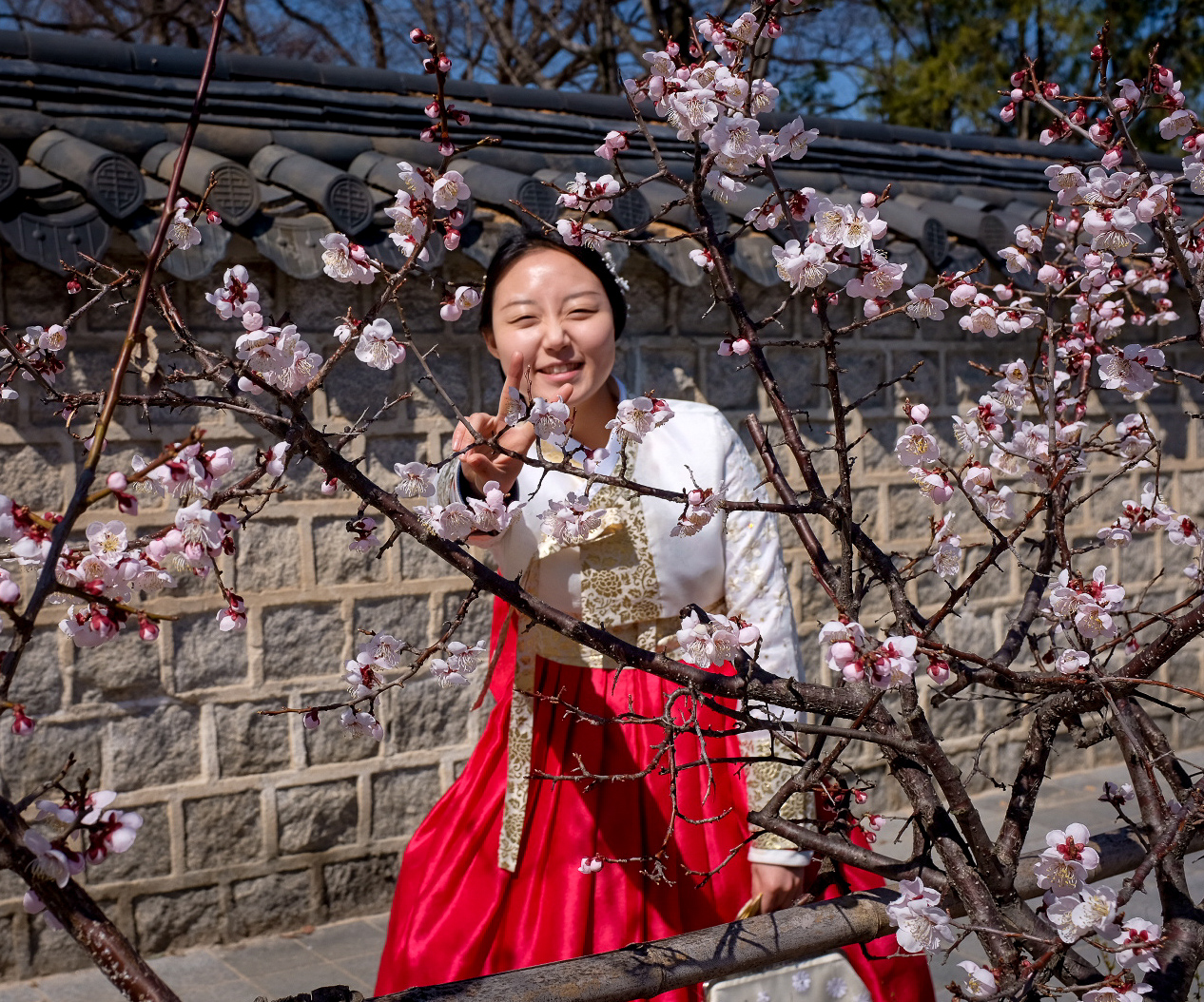
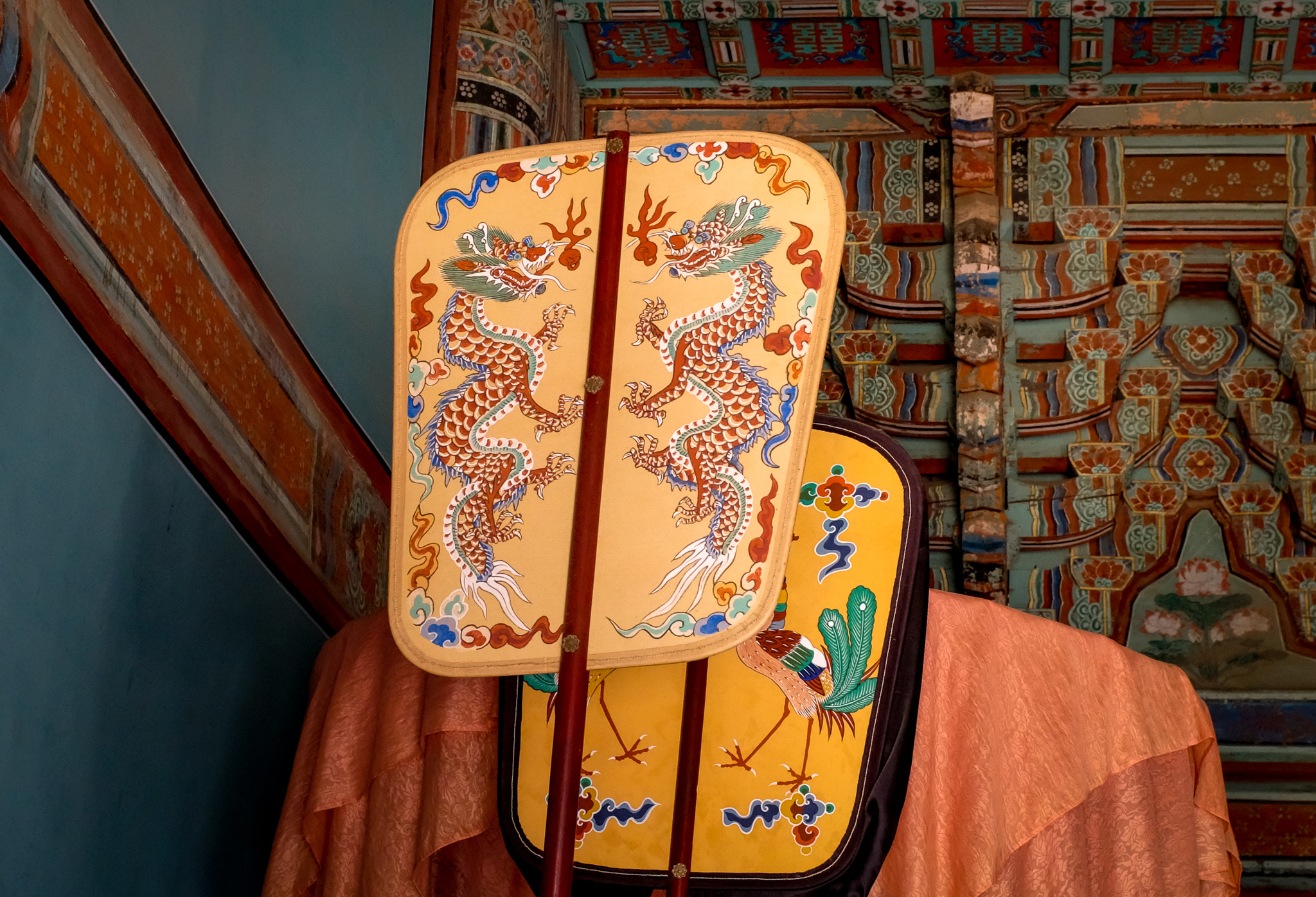
Had enough of walking around looking at shops and avoiding the milling crowds? There’s a gorgeous shrine holding a portrait of the first king of Joseon Dynasty on the northwest edge of the village. Named Gyeong-gi-jeon Hall, it was one of the three shrines built during the second king’s reign to hold his father’s portrait. This one in particular is special because the royal line originated from the area. Indeed, the Jeonju History Archives were later built and played a big role in preserving the annals of the Joseon Dynasty when all others burned during the Imjin War in 1592. But then again, those historic records only survived because a civil servant, a student and elite with resources secreted them away to a cave in the mountains. Whew!
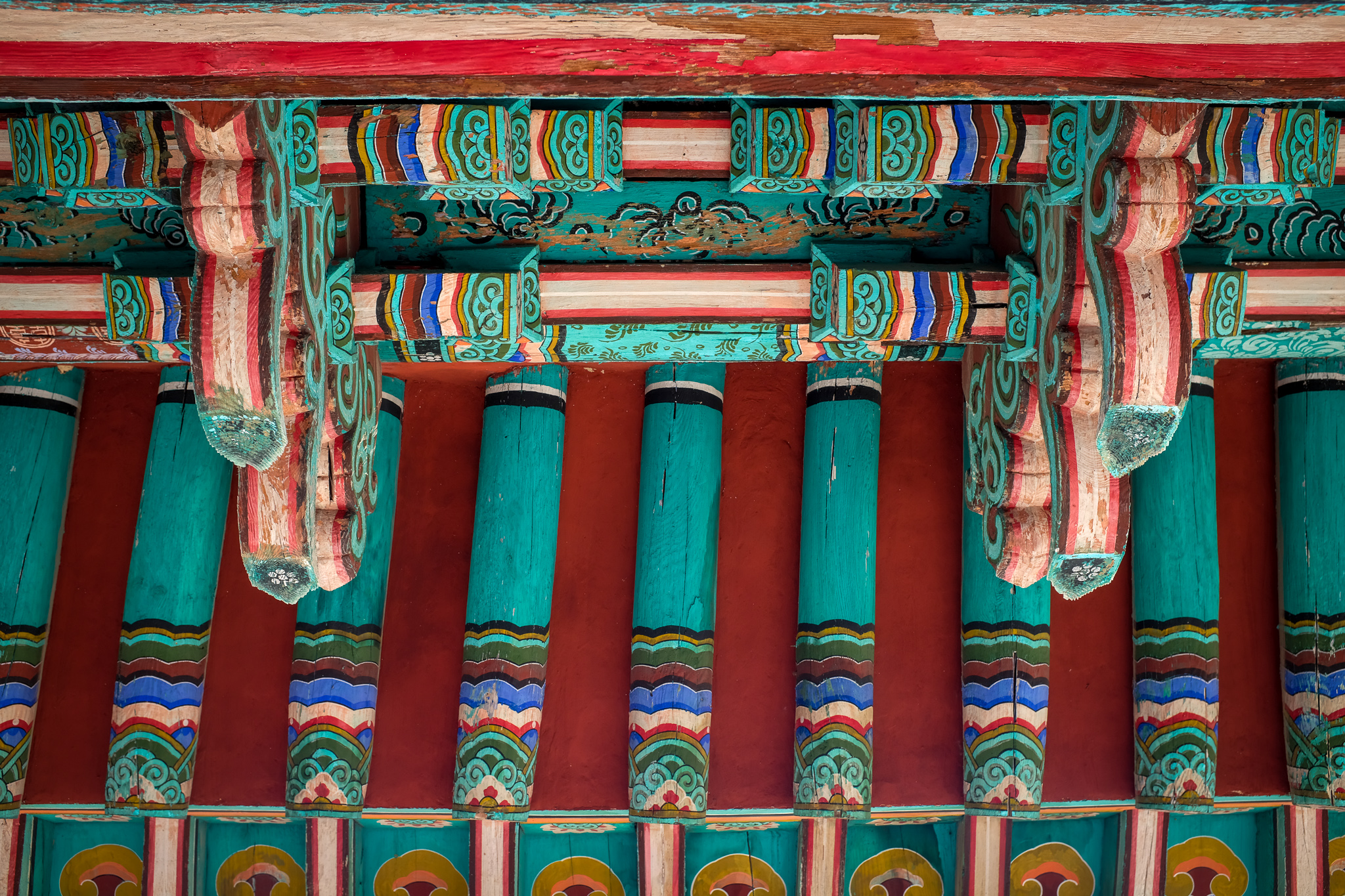
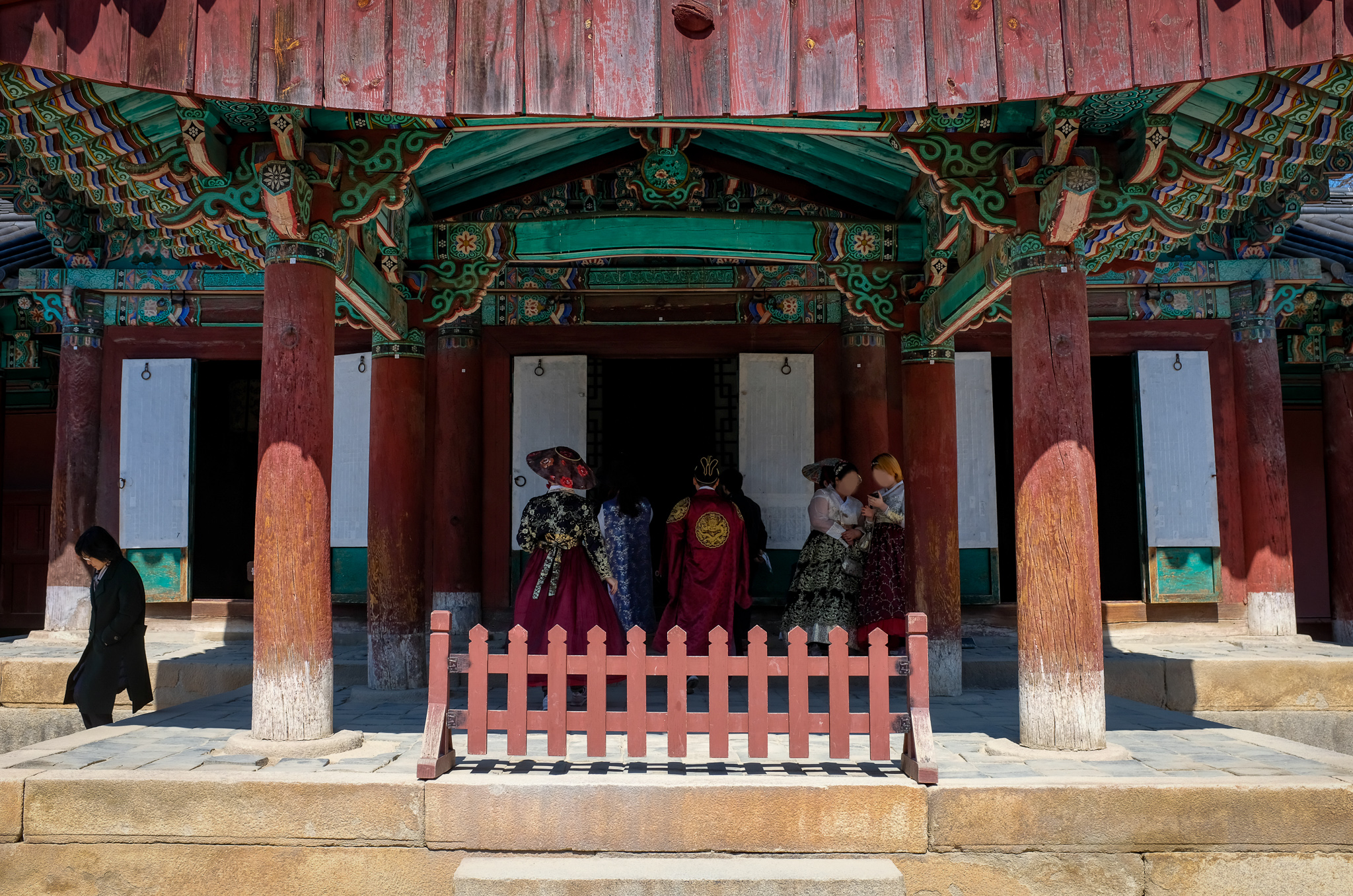
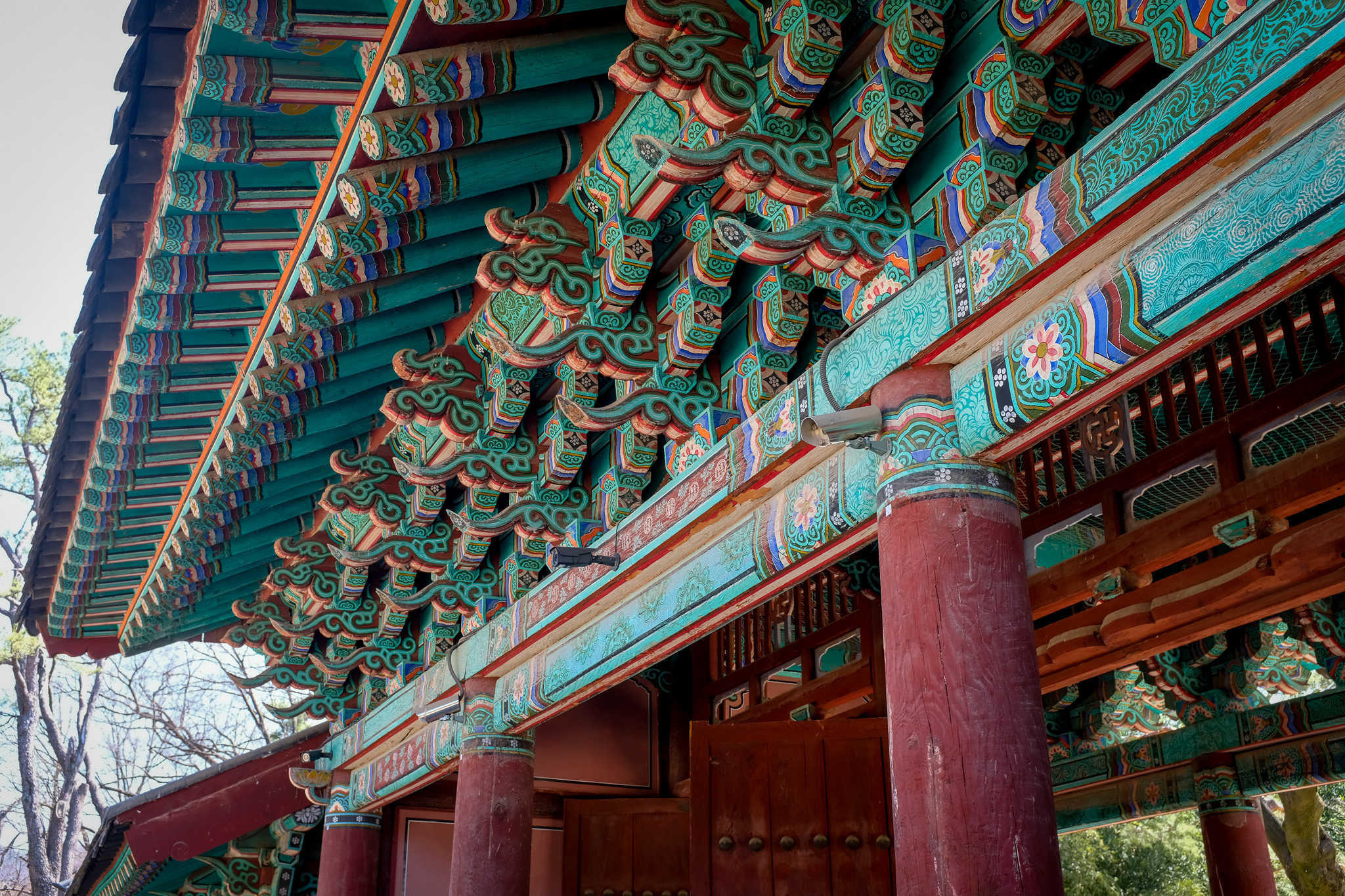
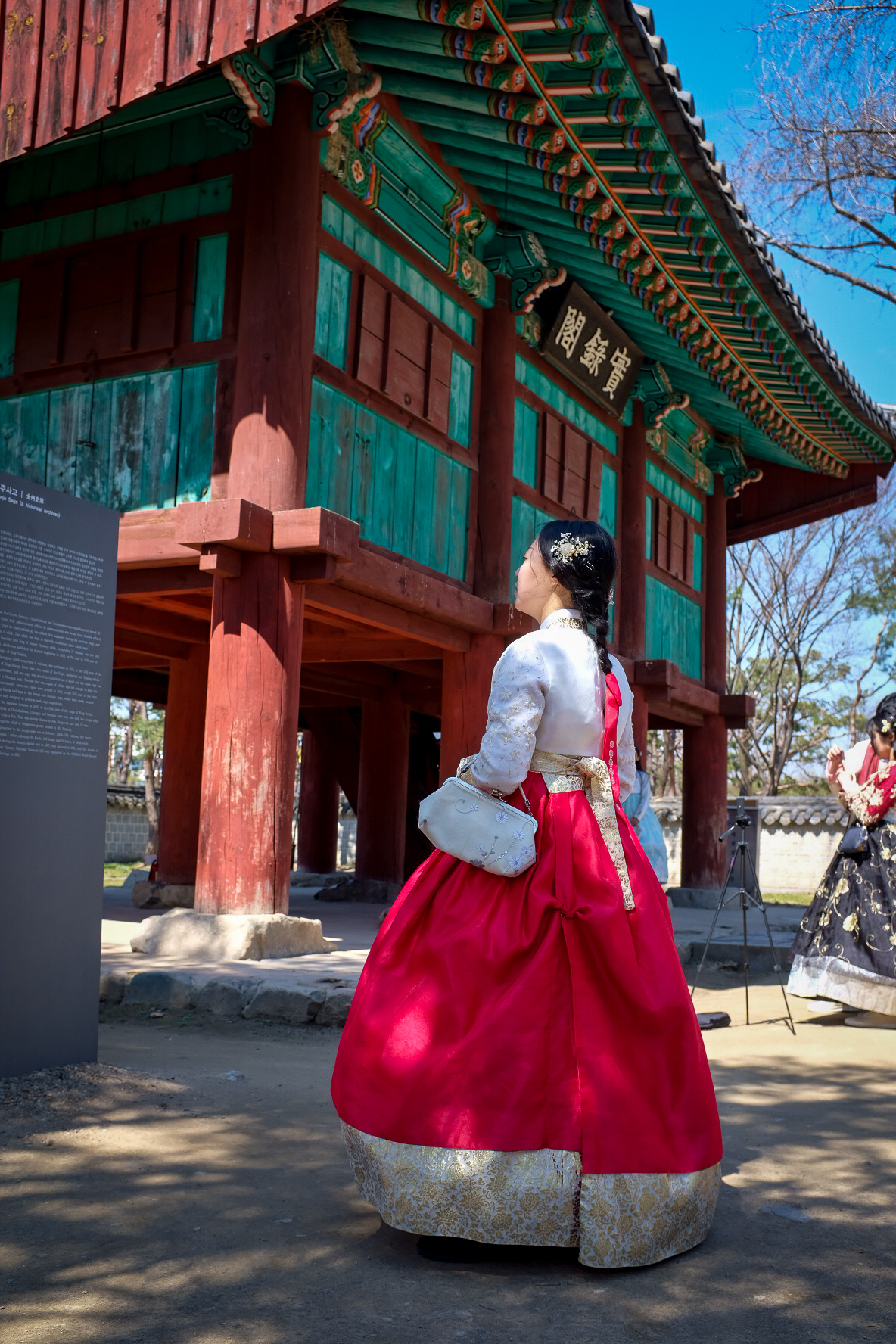
I would say that this place has quite the right balance of scenery, size and descriptions. For starters, to get to the king’s portrait, you go through an angular red doorway with spines and two heavily decorated doors – and I mean heavily decorated. Look at those intricate patterns! All this is placed in a wide courtyard surrounded by greenery, and if you keep walking to the right, there’s a bamboo forest waiting for you, quietly soaking up the sun. Walk through that forest and there’s the Jeonju History Archives amongst blooming flowers, where young couples and friends wearing colorful hanbok are taking selfies. Read the description plaque of the archives building, then climb up the steep wooden stairs to see excerpts of the annals and how they are made and reused. Apparently they beat up the paper on the riverside to wipe them clean and made a small celebration to commemorate the occasion. Cool, but wow if that doesn’t sound like a lot of work. English descriptions in the actual building are minimal, unfortunately, but there are pictures…?
Ticket prices are 3,000 won (US$3), the same as Gyeongbokgung Palace in Seoul. For more pictures, see my instagram.
Renting Hanbok
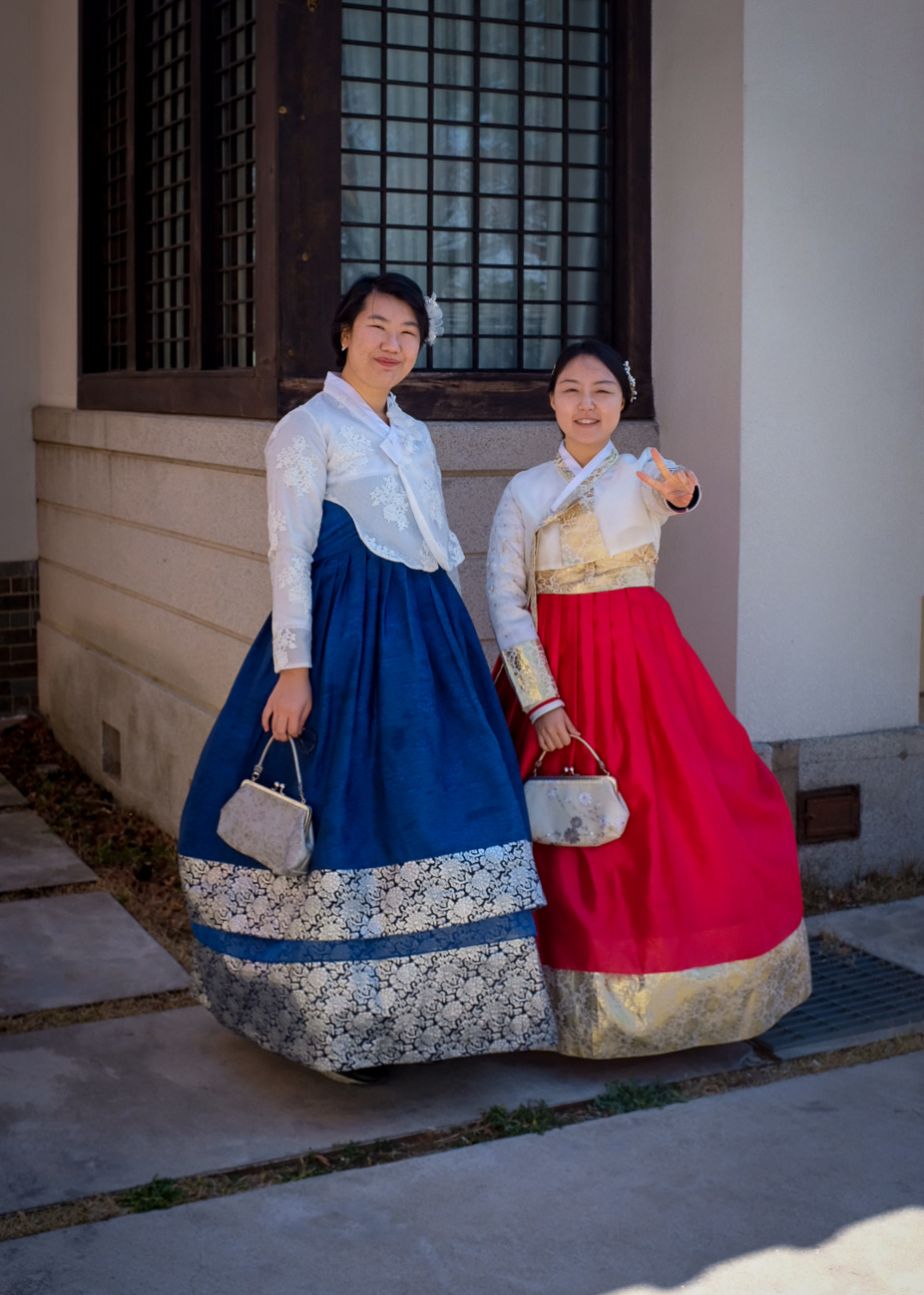
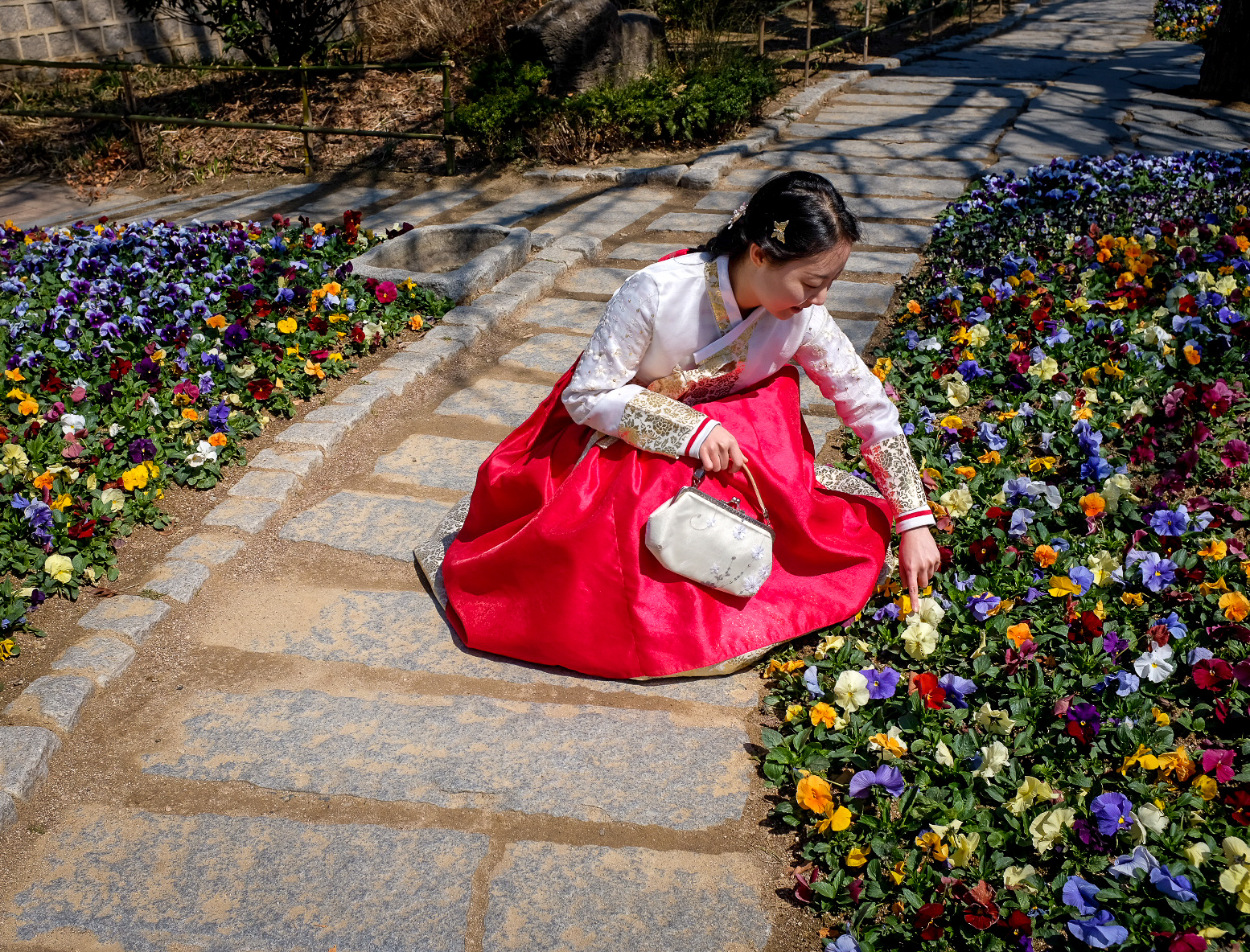
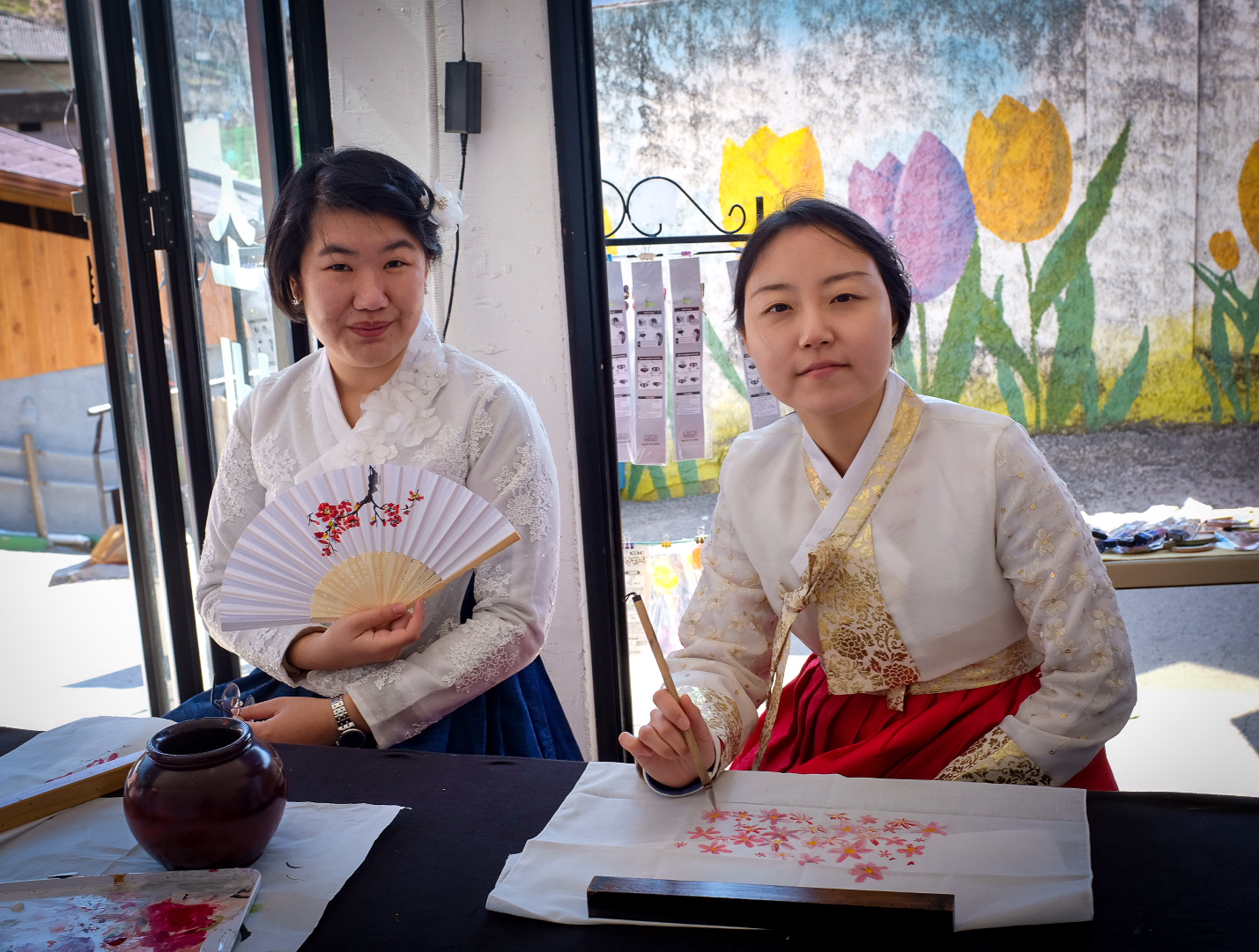
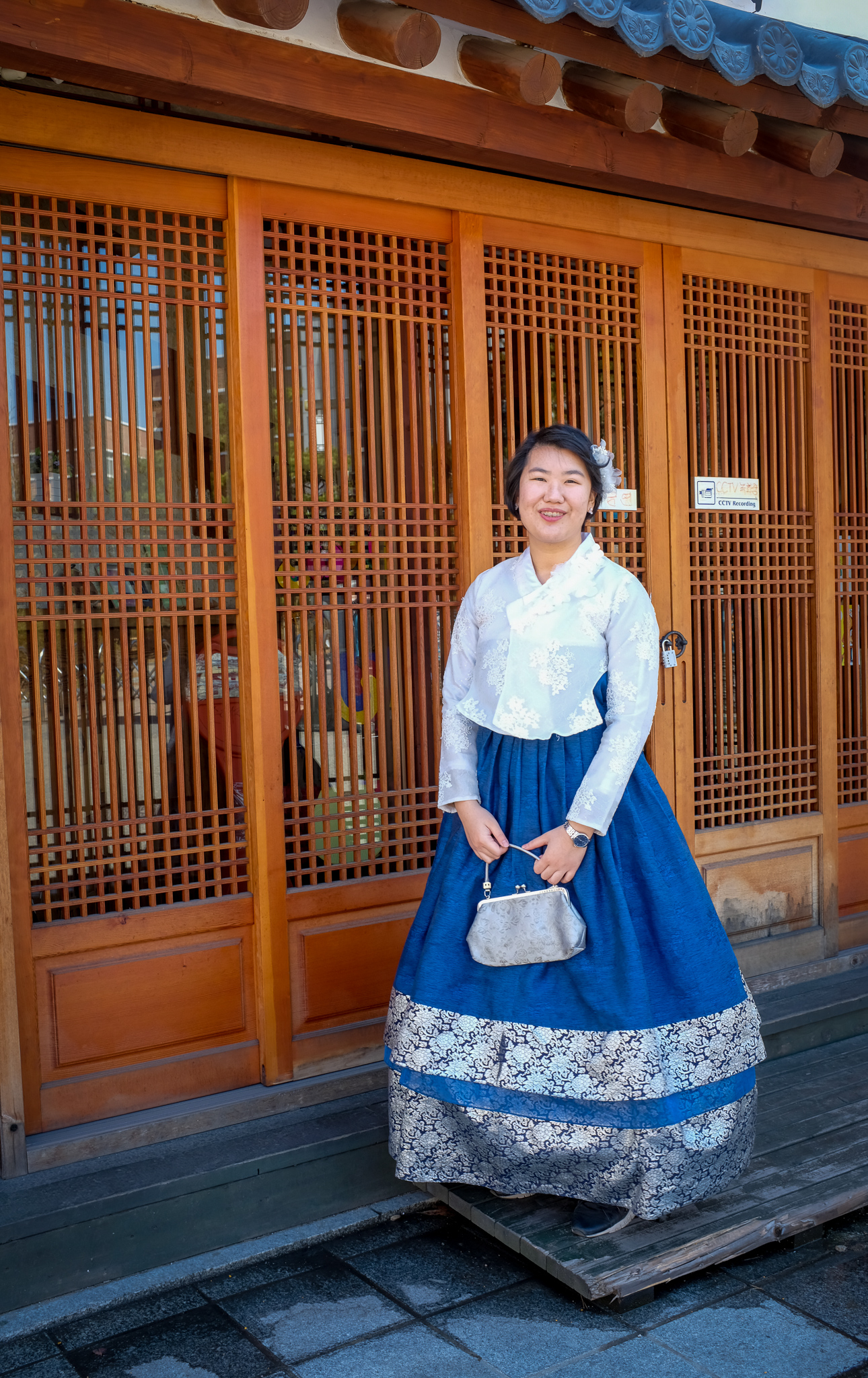
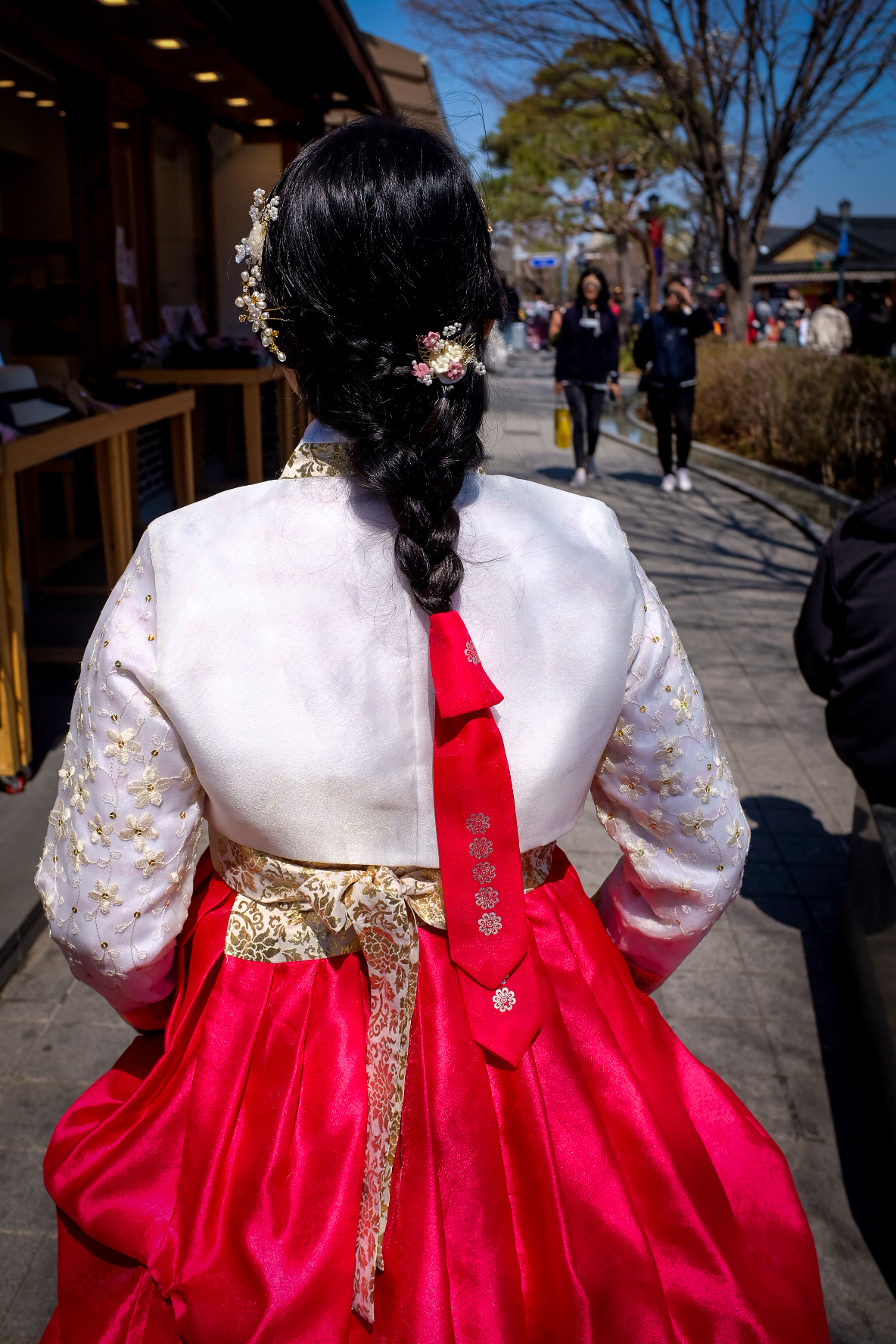
You may have noticed the tourists wearing bright and long skirts in some of my photos in instagram. They’re called hanbok, Korean traditional wear, and many people rent them for a few hours to walk around and take photos.
Hanbok is not as well known as our neighbors’ kimono or cheongsam, but they are very beautiful. To borrow a modern word, they’re ‘free sized’, and have in recent years came in all colors and patterns for rental. No longer are they the primary-colored traditional clothing that Korean families wore in Lunar new years to meet their grandparents. Some are too ‘westernized’ for me (and indeed, have been the subject of some debate by news media), but as long as the people who wear them are happy, right? For people who wanted something more peculiar, they have Kyungsung style clothing, a.k.a. 1910s-1940s wear. For the aunties and uncles who want a fond trip into memory lane, there are school uniforms in 1980s.
Price ranges were a bit different for every shop I think. All the shops do your hair to match your hanbok (sometimes for additional price). The one we went to was in the edge of the village and maybe cost 30,000won (US$27) to wear for three hours and do your hair. A cause for celebration, because we went past so many of these shops and finally, finally, saw one that looked like it had more traditional hanbok. Seriously, we saw this place on Saturday night and made a couple of wrong turns trying to find it in the morning.
One funny thing about this rental thing. There’s a fancier kind of hanbok for Korean dancing girls, complete with ornate flower patterns on bold skirts and a high paper hat. There were a lot of guys who wore this! In fact, there were quite some couples who crossdressed, and I was pretty amused when I overheard one complain about going up the stairs with it on. Welcome to our world, yeah? But no way are Koreans this bold! Must be the shops who recommend doing so, and I take off my hat to them for this interesting surprise.
Jaman Mural Village
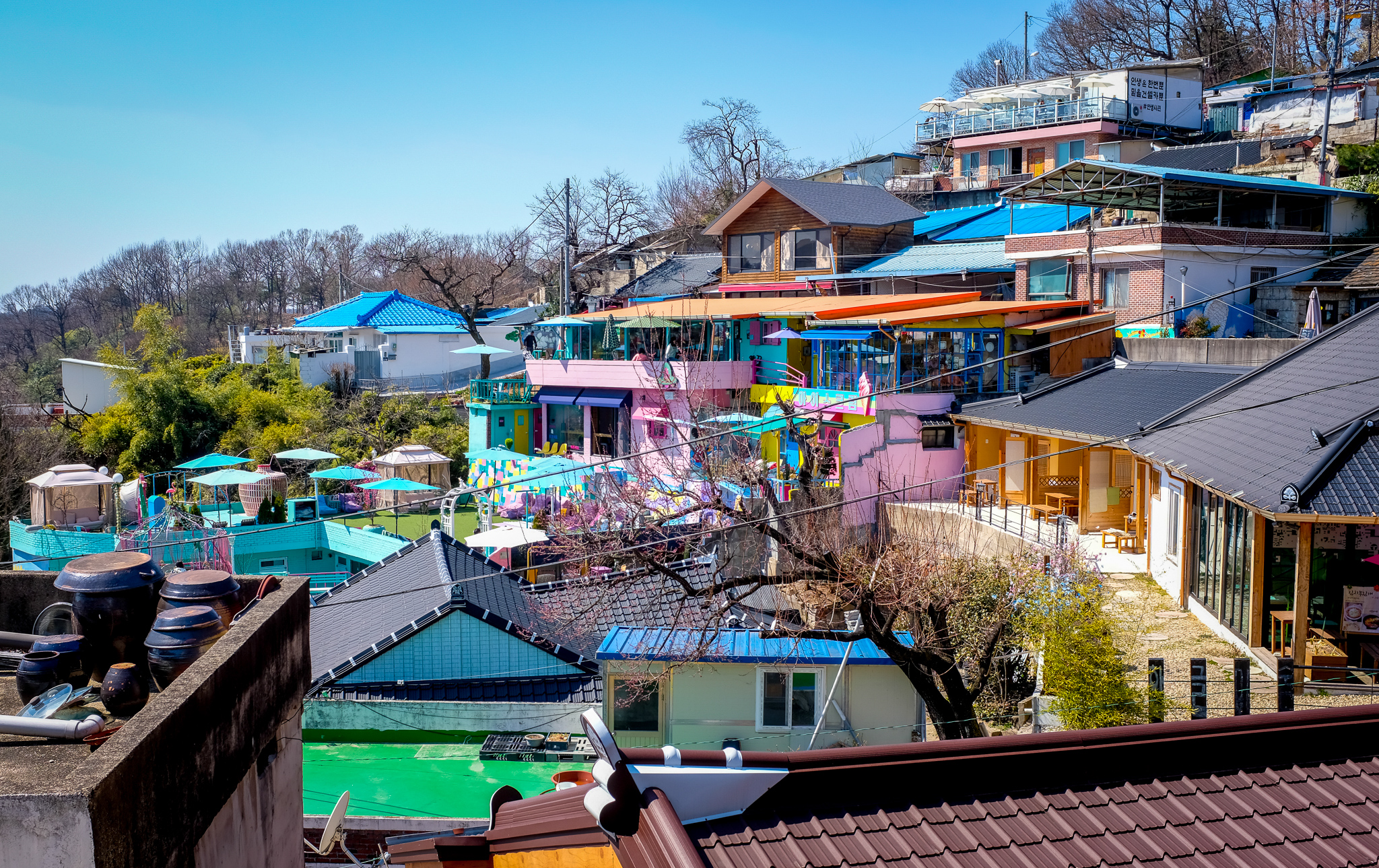
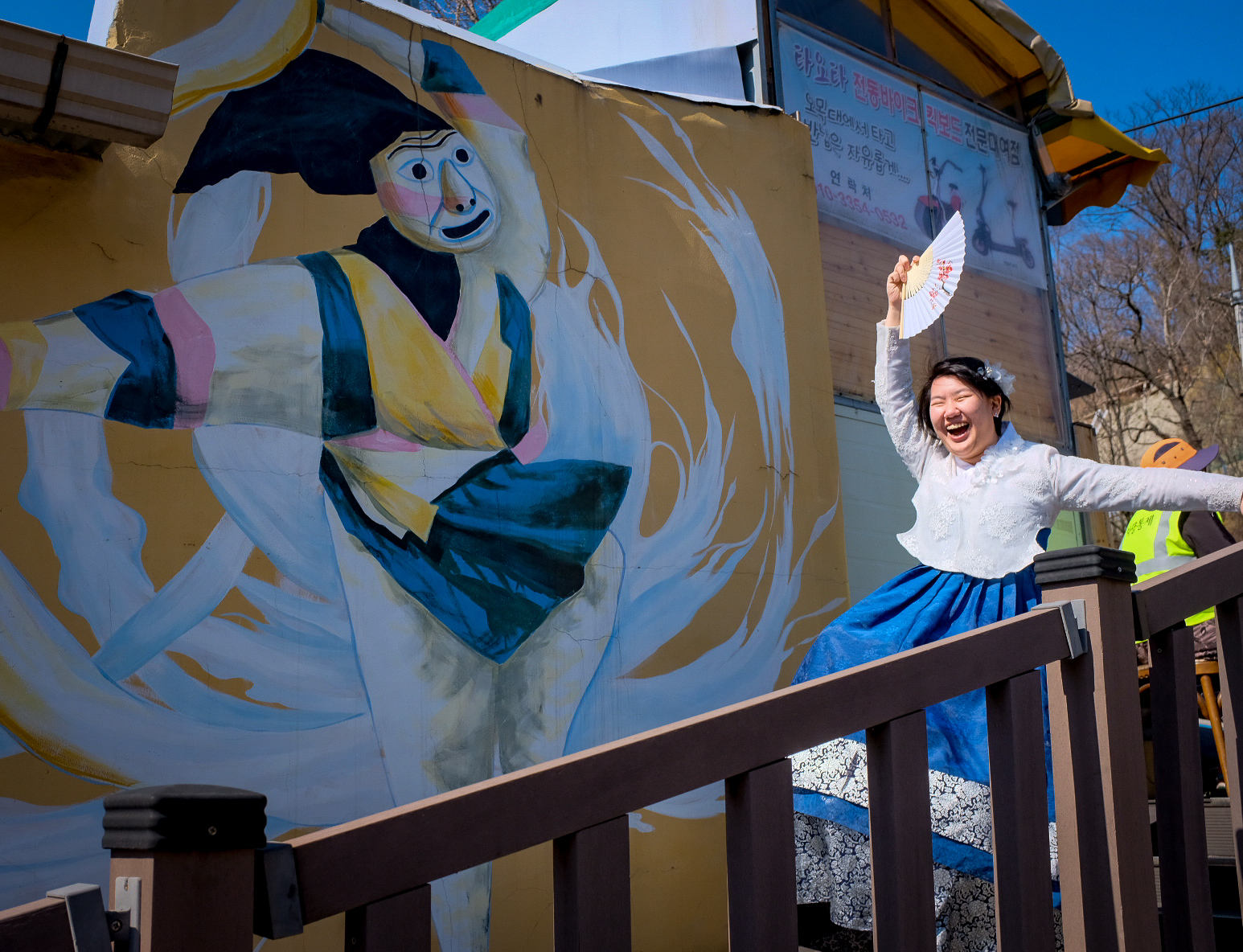
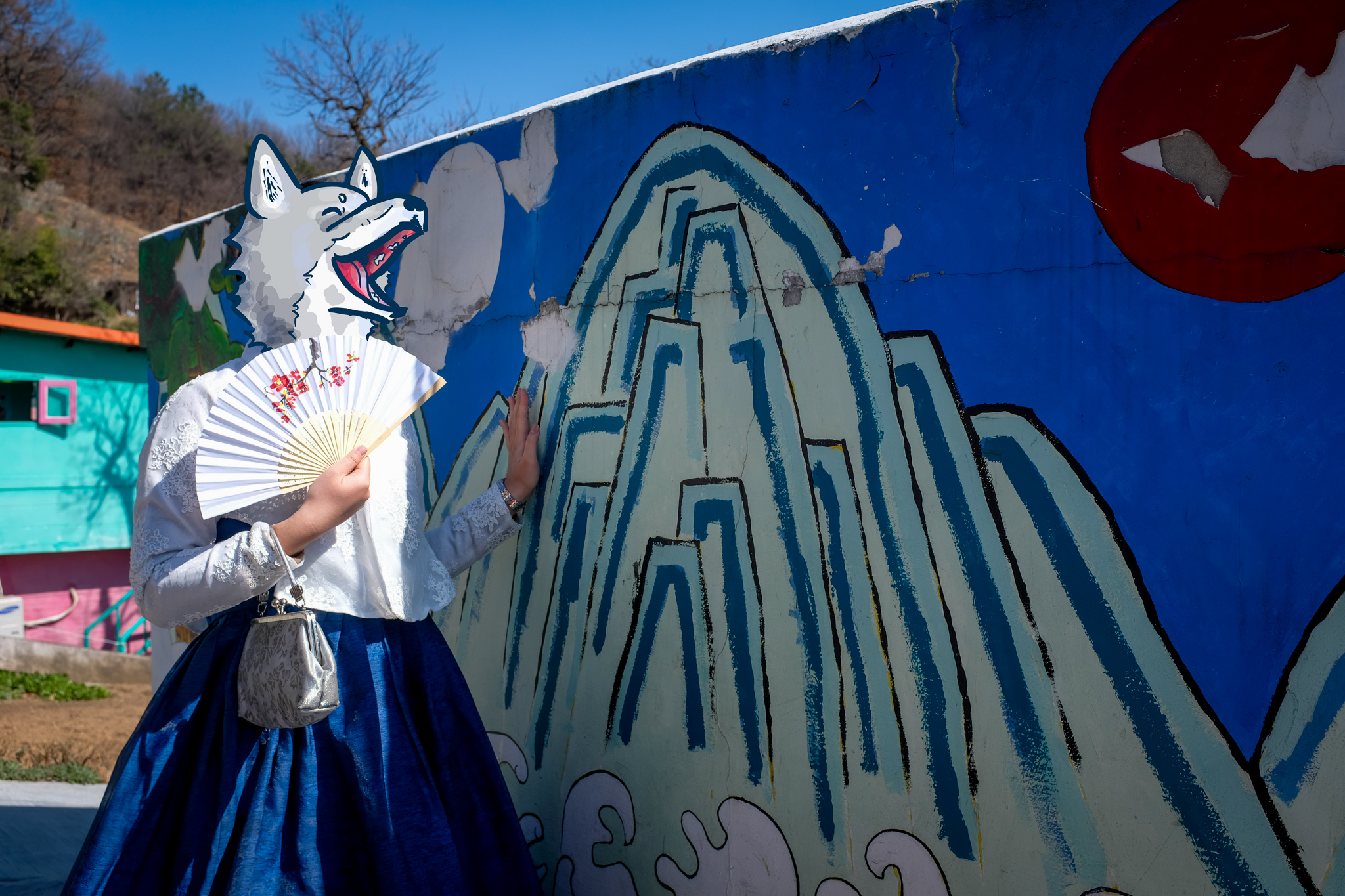
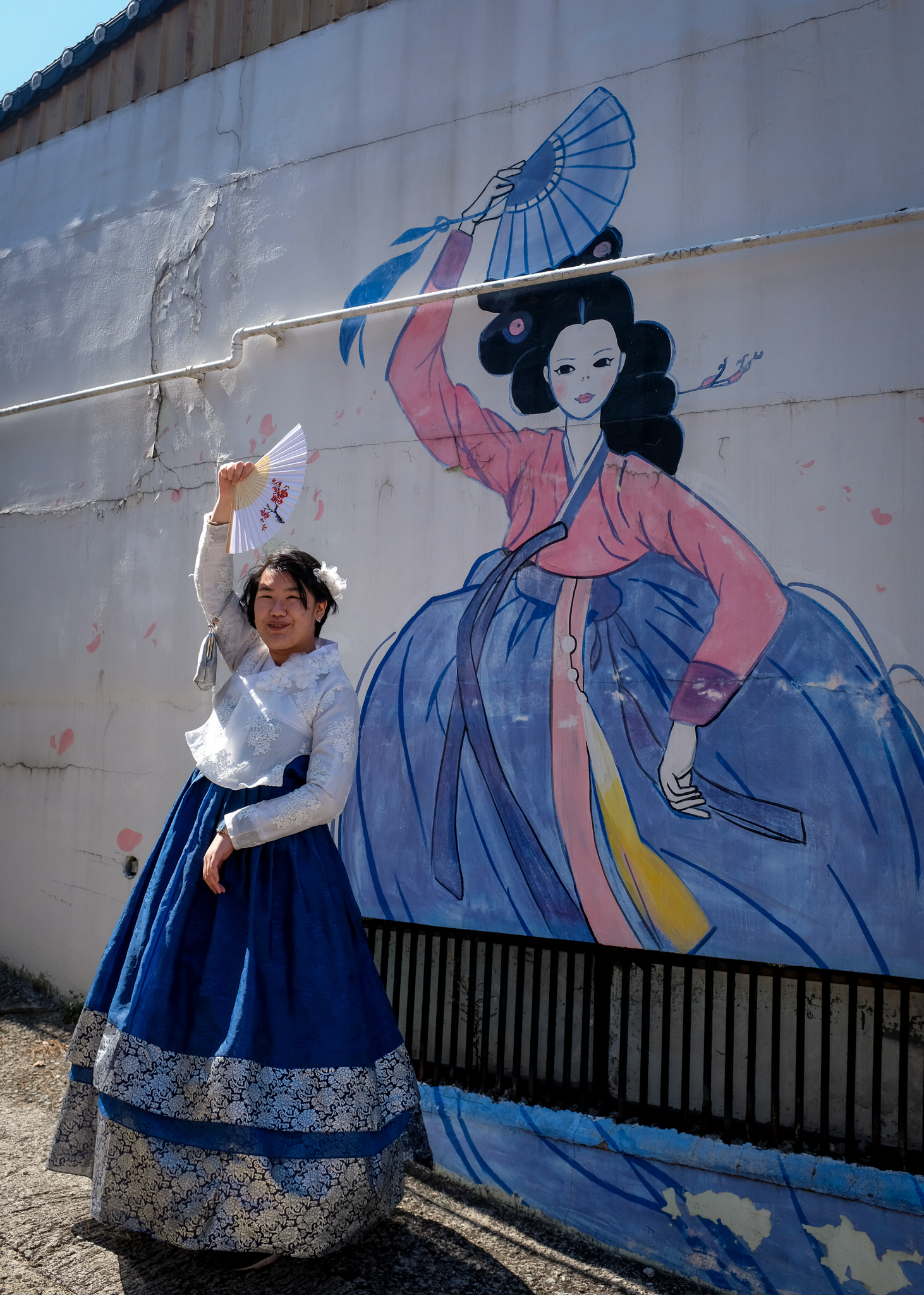
And the final destination of my trip: Jaman Mural Village. The area boasts a great view of Jeonju Hanok Village, being up on the mountain. It was formerly a run-down residential area, but artists painted murals on the walls to brighten up the place. We amused ourselves by mimicking the painted characters – and we weren’t the only ones. Some people stay longer in this area in stylish cafes and guest houses. But take care not to be too loud – it’s still a residential area!
And with the rest of my photos beneath, I conclude my Jeonju trip here.
 Jamie on the move