

It’s been awhile! I’ve been going to a lot of trips and festivals during mid-April and May, but haven’t actually wrote anything about them yet.. mainly because I was laid up with a cold and some essays. Hopefully this will teach me to be less lazy!
Seoul is a big, big, big metropolitan city teeming with 9.8 million people, but the area I like to hang out the most is near Gwanghwamun Plaza, a long stretch of public open space located smack down in the center of everywhere cool and cultural. Go north, and you get to see Gyeongbokgung Palace, the biggest palace in Seoul. Go east, you can take a stroll in Insadong, a street known for traditional (and more modern) cultural shops. Go south and turn left, and you can go down to Cheonggye Stream. Go west, and you can visit museums, museum villages and Gyeonghuigung Palace.
Here’s another route I recommend: go south, walk past the Seoul Metropolitan Government, and turn right. You’ll find yourself in front of a pretty green, red-pillared gate of another historical site: Deoksugung Palace. Or as I’ve nicknamed it, the architectural blender of history and circumstances. This blog piece was so long, I separated it into two parts – tour and history. This one’s the tour.

You’re first going to see…
Start from the Daehanmun Gate, which is the main entrance. Tickets are usually 1,000won, or, US$1. Admission every last Wednesday is free. Tourists wearing hanbok, or Korean traditional clothes, are also allowed in for free, though hanbok crossdressers have to pay like everyone else. Ergo, women have to wear skirts, and men have to wear pants. It’s disappointing, because it’s fun and becoming a little trendy. But yeah, don’t succumb to temptation if you want to save a dollar, lol. What am I saying? Wear whatever the heck you want. It’s a dollar.
Daehanmun Gate has a Changing Ceremony of the Royal Guards three times everyday at 11am, 2pm, and 15:30. It might be cancelled due to bad weather, or, on account of the demonstrations of old people waving the Korean and American national flags, lack of space on Saturday afternoons.
By the way, congratulations if you’ve made it in early May! The whole path beyond the main gate is planted with cherry blossom trees. One reason why the palace is so popular in spring.
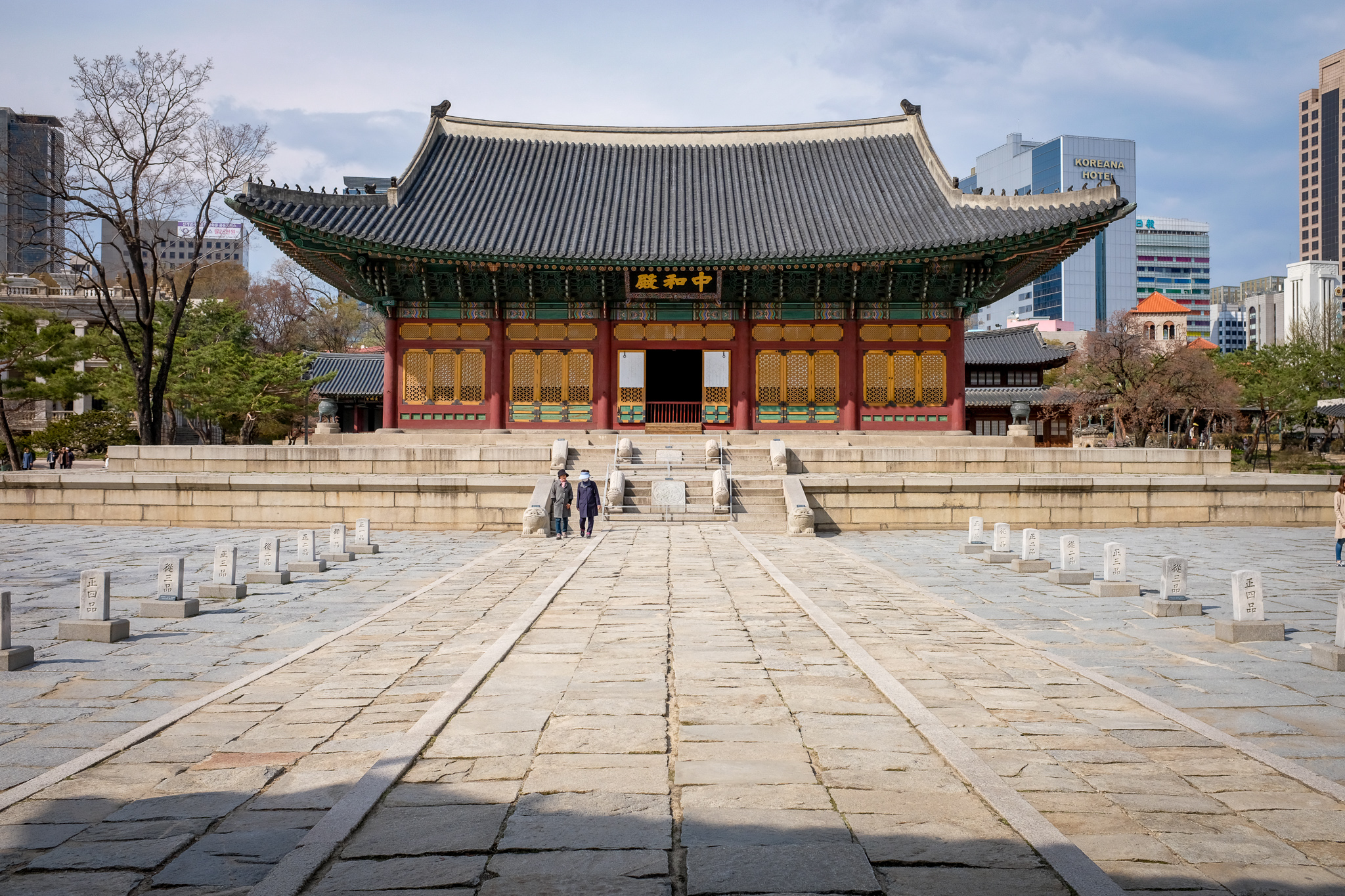
If you keep walking once you’re inside, you’ll see another gate on your right. Its plaque is written in ancient Chinese characters (Hanja) of middle-harmony-gate, read from right to left. The gate is along the path of the royal guards, which means you might be able to enjoy a good photo-shooting opportunity, like I did. Inside the gate is a large courtyard with little stone pillars, facing a colorful wooden building with red pillars, golden windows and green support blocks beneath black roof tiles. The building’s name is Jung-hwa-jeon, the main hall where state affairs were conducted. You can see it from the photo on the left. The little stone pillars are engraved with the ranks of retainers – they were to sit beside the correct one for meetings with the king.
Yes, you’re still in Korea
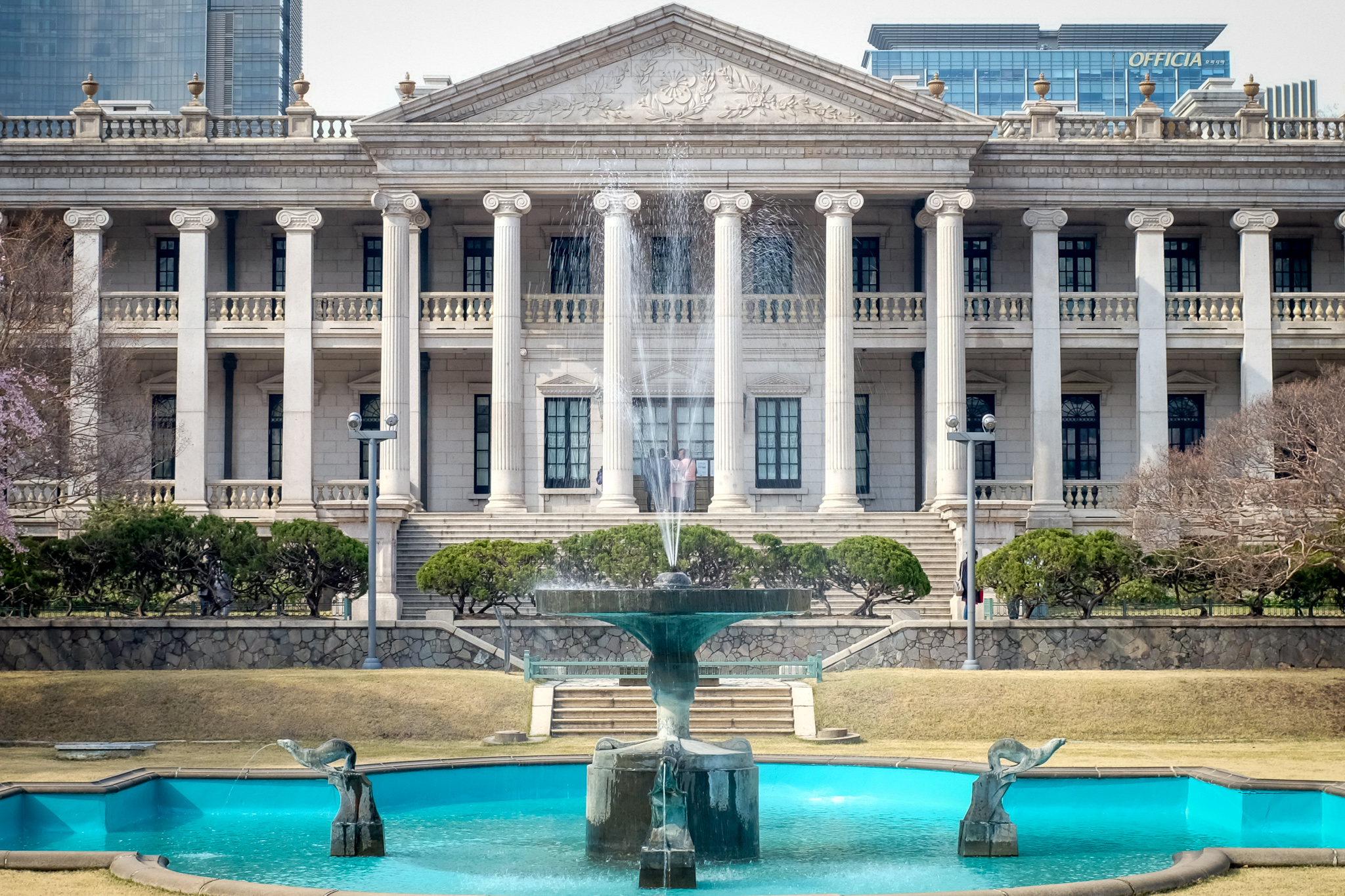
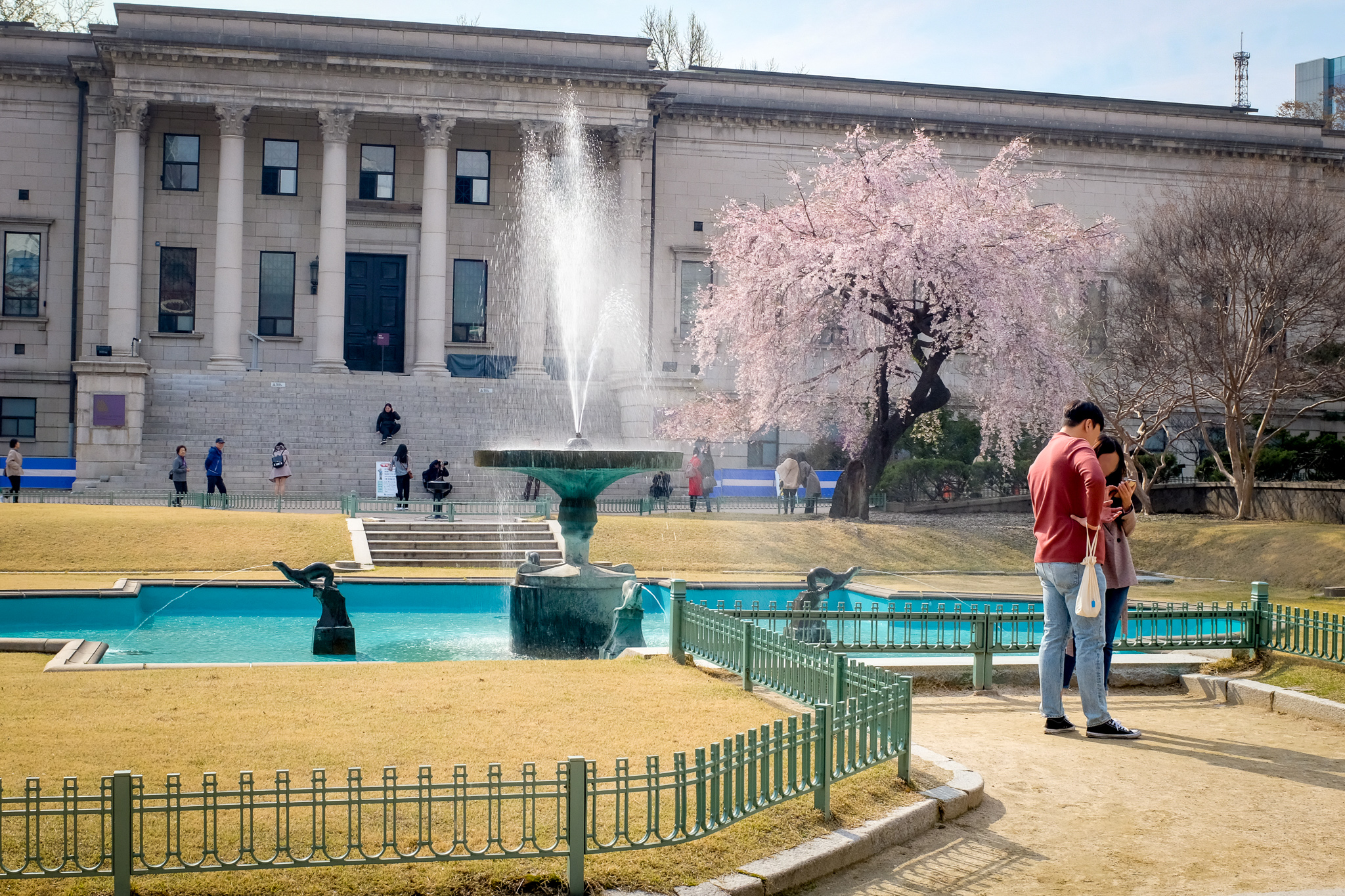
No, you did not just suddenly teleport yourself to somewhere in the Western hemisphere. They’re a part of Deoksugung Palace. At the left of the courtyard you’ll see a fountain and two stone buildings – they’re called Seok-jo-jeon, and was first built in 1910 (left) and by a British architect called Harding. The other was built in 1937 (lower right). They’ve piled up quite the CV over time, accommodating a king, an art gallery, the Joint Soviet-American Commission, the UN Temporary Commission on Korea and a national museum. Now the left one is the Korean Empire Historical Museum, and the right one is an annex building of the National Museum of Modern and Contemporary Art.
The Daehan (Korean) Empire Historical Museum has three floors, but only the basement requires no booking. To see the first and second floor with a local guide, where history exhibits have been made with recreations of the king and queen’s apartments, you can sign up on a waiting list at the entrance for a specific schedule. Us Koreans, however, have the delight of having to go through online booking a week before. Ugh. You wouldn’t think it’s hard, getting a seat for these ‘traditional culture’ events, but you don’t want to know how hard it is to get bookings for this stuff! For one thing, the booking competition for night admissions in Gyeongbokgung Palace are nigh impossible to win against – to lessen the population’s collective wasting of time, the website specifically tells us the hour in which reservations start. But everybody enjoys good Internet speed here, so…
Going back to Seokjojeon, the main hall of this museum hosts a classical music concert for 90 people every last Wednesday from March to November. Ten of you lucky people can walk in on the day and reserve a seat from 18:20, 40 minutes before the concert begins. No fee.
The atypical continues
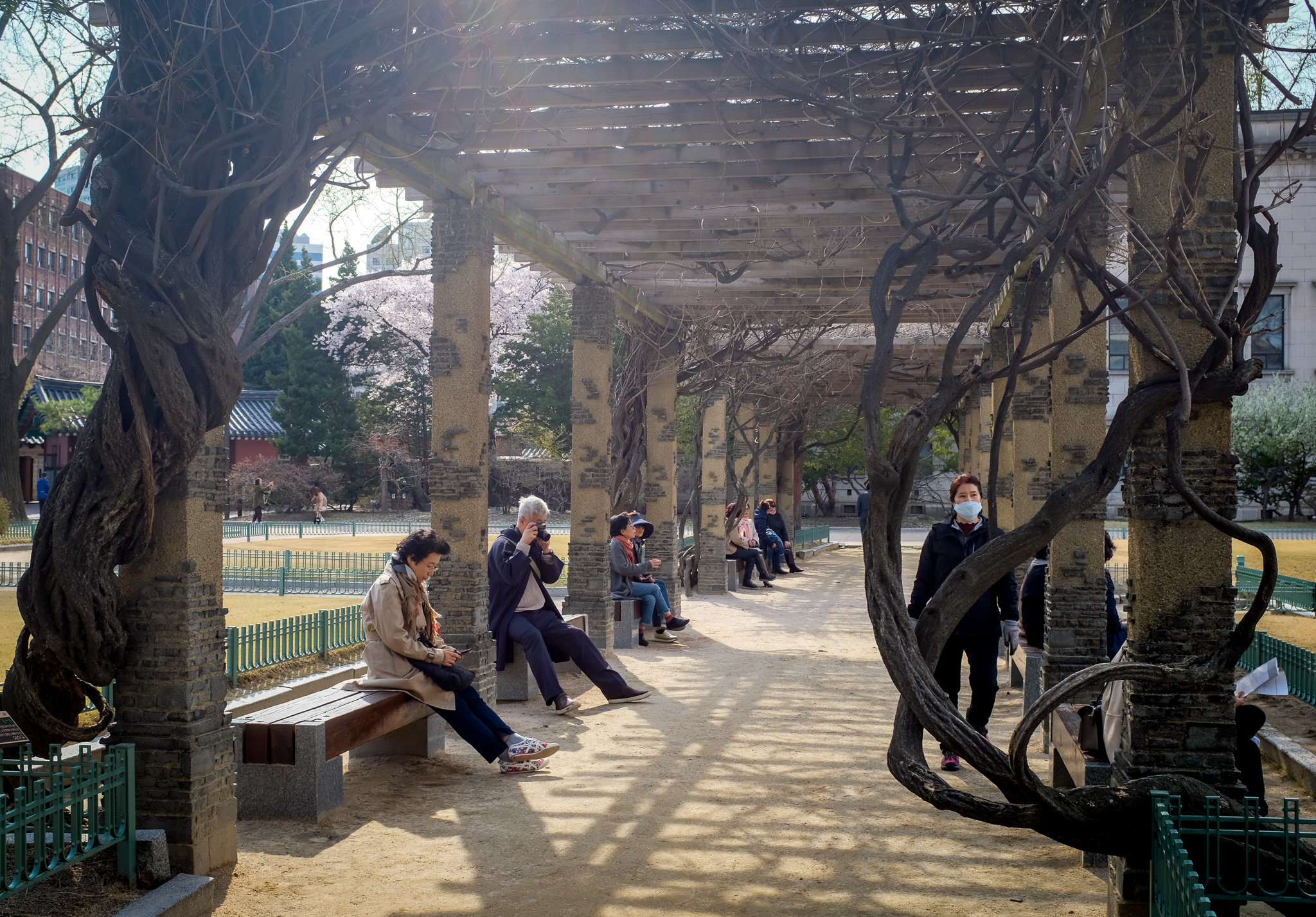
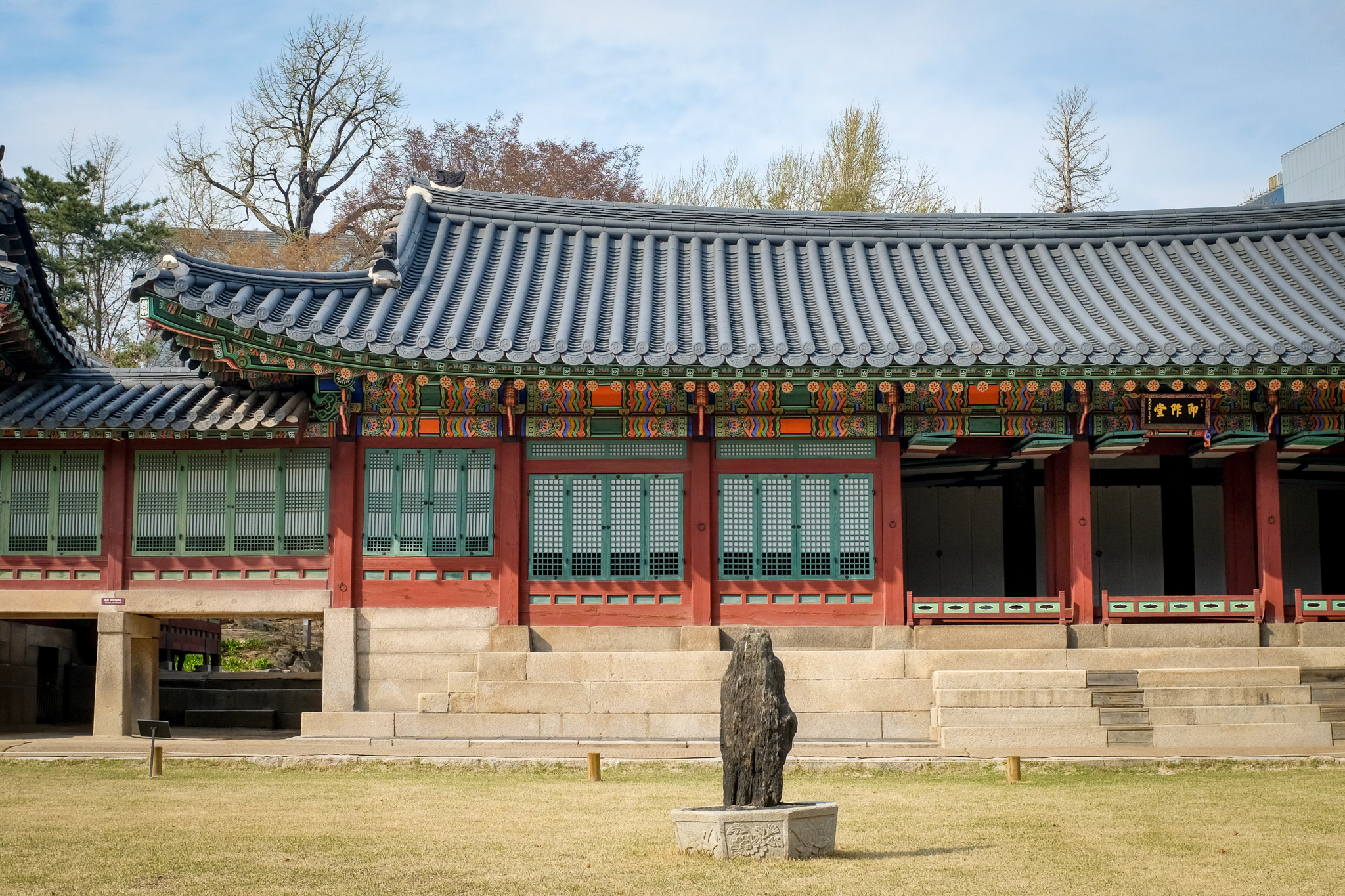
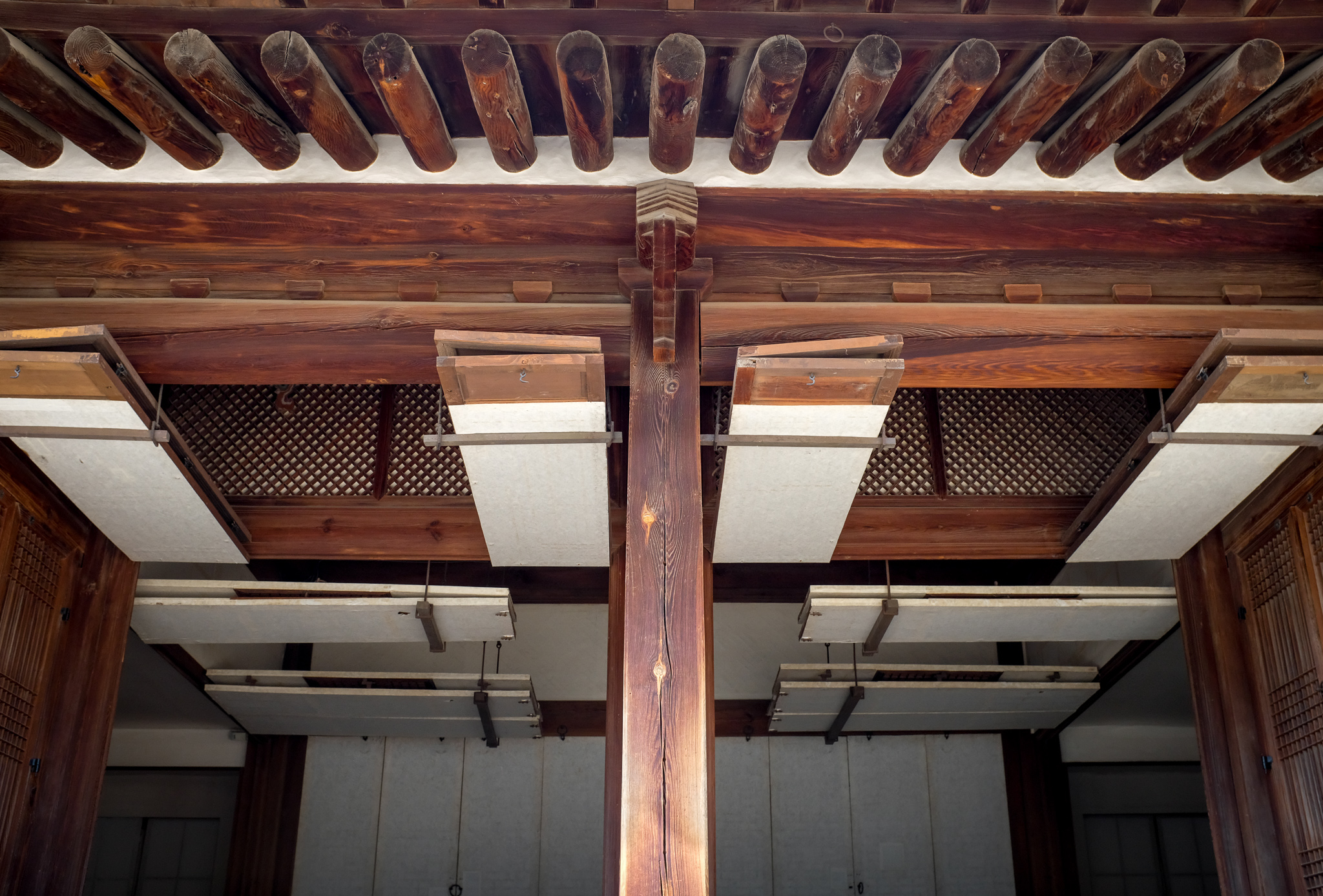
Usually, palace buildings and layout are very inflexible, or so I read. But as I’ve said earlier, Deoksugung Palace didn’t start out as a palace, and went through a lot of construction and reconstruction in an era with much change. So continuing on, here are more rarely seen buildings in the palace (at least from my experience): two one-story buildings connected by a corridor, a two-story wooden building with no decoration, a red mortar-and-brick building and half a building primarily consisting of a wide veranda. Unfortunately I have no photos of the latter two.
Sometimes there are concerts on the grass in front of the two connected buildings. One is called the Deoksugung noon concert, and is held every Friday noon in a series twice a year. The genre is varied from what I hear. There’s also a mock diplomatic reception for envoys to the Korean Empire, which in addition to actors playing the king and envoys, has a few banquet performances such as military band performances, sword dance and lion dance. Finally, a series of Korean classical music concerts called Deoksugung Pungnyu is held in Jeonggwanheon (the veranda building) at 7pm Thursday from May to October. You can walk in to apply and can enter from 6:40pm.
I skipped all the history and details about the more particular buildings, but this blog piece is still this long! There’s that much to enjoy in Deoksugung Palace. Comparing it with the other palaces, it’s much quieter and compact than Gyeongbokgung Palace (which everybody goes to), and bigger and more varied than Gyeonghuigung Palace. If you’re just walking by to take photographs of all the skyscrapers in Gwanghwamun plaza, I do highly recommend going. Until next time!
 Jamie on the move